Lalaounis Jewelry
Lalaounis Jewelry: A Guide To Greek Heritage In Gold
You don't collect Lalaounis jewelry by accident. You're drawn to the weight of history, the glow of high-karat gold, and the way ancient Greece feels startlingly modern on your skin. This guide gives you the essentials: who Ilias Lalaounis was, how to read the house's design language, what to buy, how to authenticate and date your piece, and how to wear and care for it so it becomes part of your story. Whether you're hunting for a torc at auction or considering your first pair of hammered-gold earrings, you'll find practical insight here, minus the fluff.
The House, The Founder, And The Legacy
Ilias Lalaounis (1920–2013) transformed Greek goldsmithing from souvenir trade into high art. Trained in his family's jewelry business in Athens, he pursued a radical idea for mid-20th-century fine jewelry: that you could mine antiquity not for motifs alone, but for methods. In the late 1960s he launched the eponymous house, presenting collections built around archaeological research, Minoan spirals, Hellenistic granulation, Byzantine crosses, and executed by craftspeople who revived time-intensive, largely hand-wrought techniques.
What distinguishes the brand today is continuity. The Ilias Lalaounis Jewelry Museum in Athens (founded in the 1990s) preserves both archive and workshop practices, and the house still produces pieces in 18k–22k gold with the hand-finished textures you expect to see. If you care about provenance, you'll appreciate that many collections have been documented in catalogs and exhibitions, giving you primary references for studying motifs, construction, and period variations.
Design DNA And Techniques
Hellenistic And Byzantine Inspirations
When you hold a Lalaounis piece, you're holding a conversation with antiquity. Hellenistic references show up in coiled serpents, laurel wreaths, ram's-head terminals, and the controlled exuberance of granulation and filigree. Byzantine echoes appear in cross medallions, mosaic-like surfaces, and the pairing of gold with richly colored stones, pearls, or enamel. The result isn't costume archaeology: it's a modern grammar built from old alphabets, designed to be worn daily rather than vitrined.
High-Karat Gold, Texture, And Ancient Methods
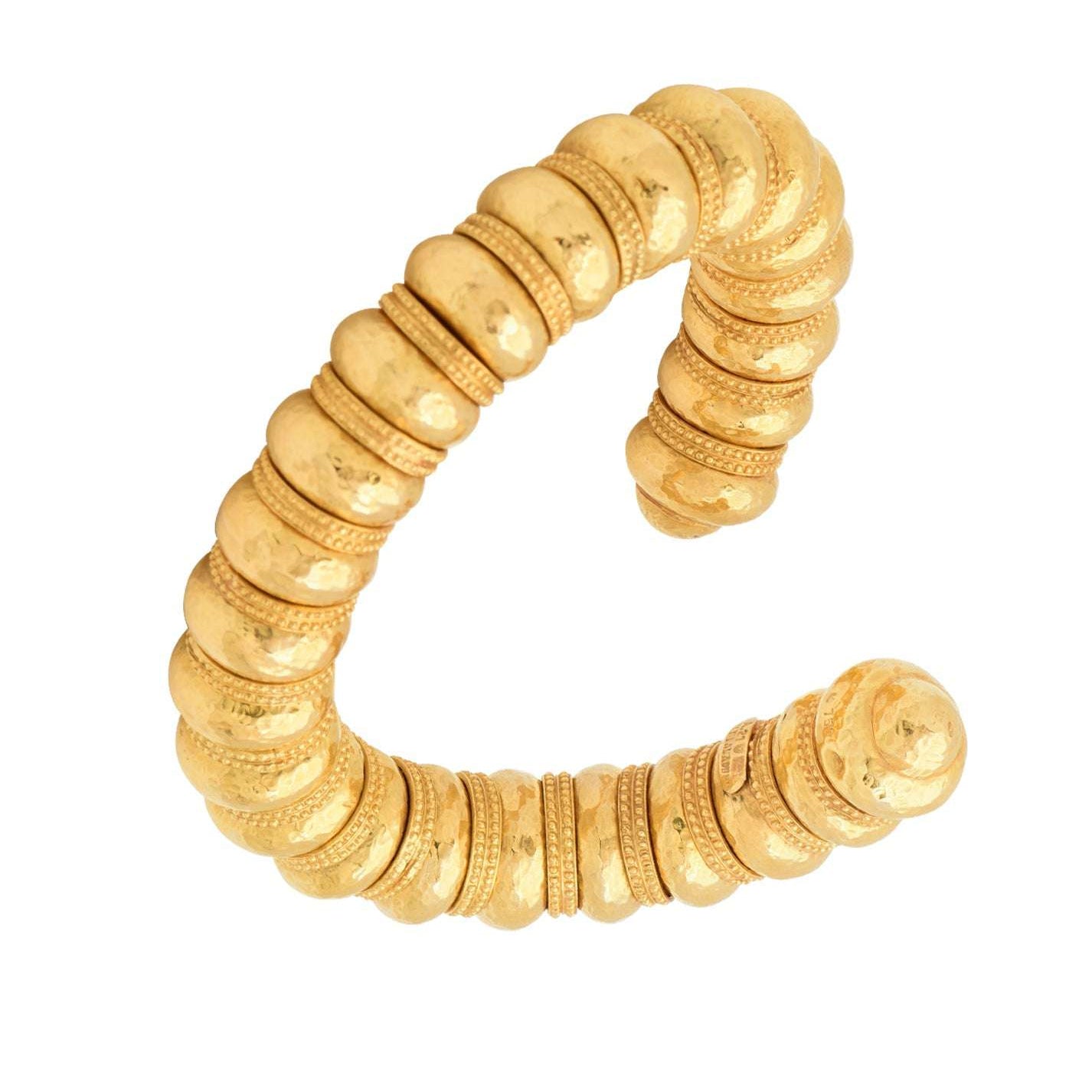
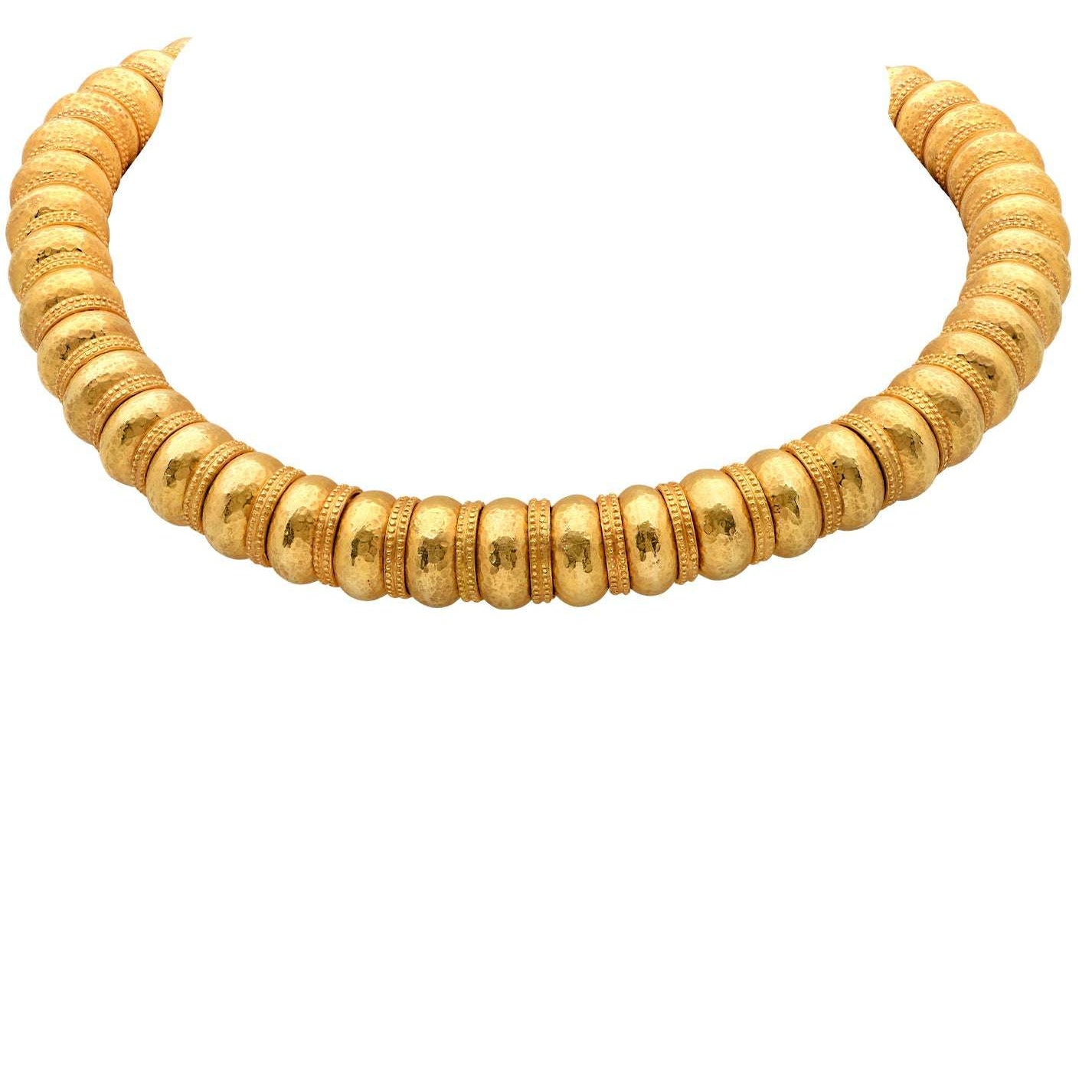
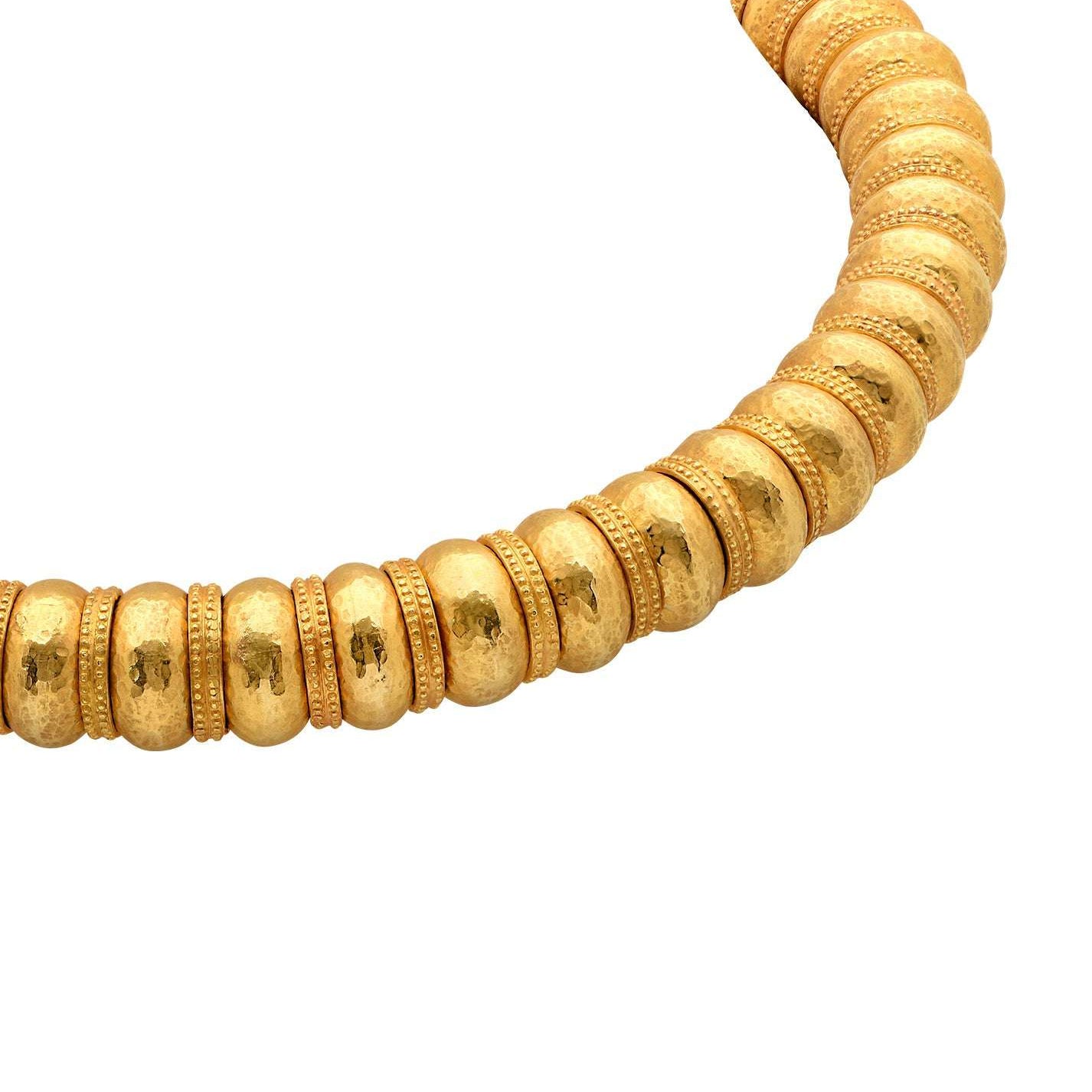
Lalaounis jewelry is renowned for its tactile surfaces. Expect hand-hammered and brushed finishes, corded wires, twisted ropes, and finely beaded edges. You'll see ancient techniques adapted for contemporary strength: granulation (minute spheres fused to a surface), filigree (delicate wirework), repoussé and chasing (raised relief and detailing from front and back), and intricate hinge construction. High-karat gold, often 18k and frequently 22k in earlier and special pieces, delivers that unmistakable, saturated tone. It's warmer, softer, and slightly more matte when textured by hand, and it develops a graceful patina rather than a glossy shine.
Animal Icons And Mythical Creatures
Animal iconography is a throughline. Rams, lions, dolphins, and serpents recur, as do mythic beings like griffins. Ram's-head terminals on cuffs and torcs signal strength and guardianship: dolphin forms nod to seafaring Greece: serpents coil as protection and renewal. These aren't cartoonish: they're stylized and architectural, often appearing as mirrored terminals or repeating panels that balance symbolism with wearability.
Signature Pieces And Collections
Chokers, Torcs, And Collar Necklaces
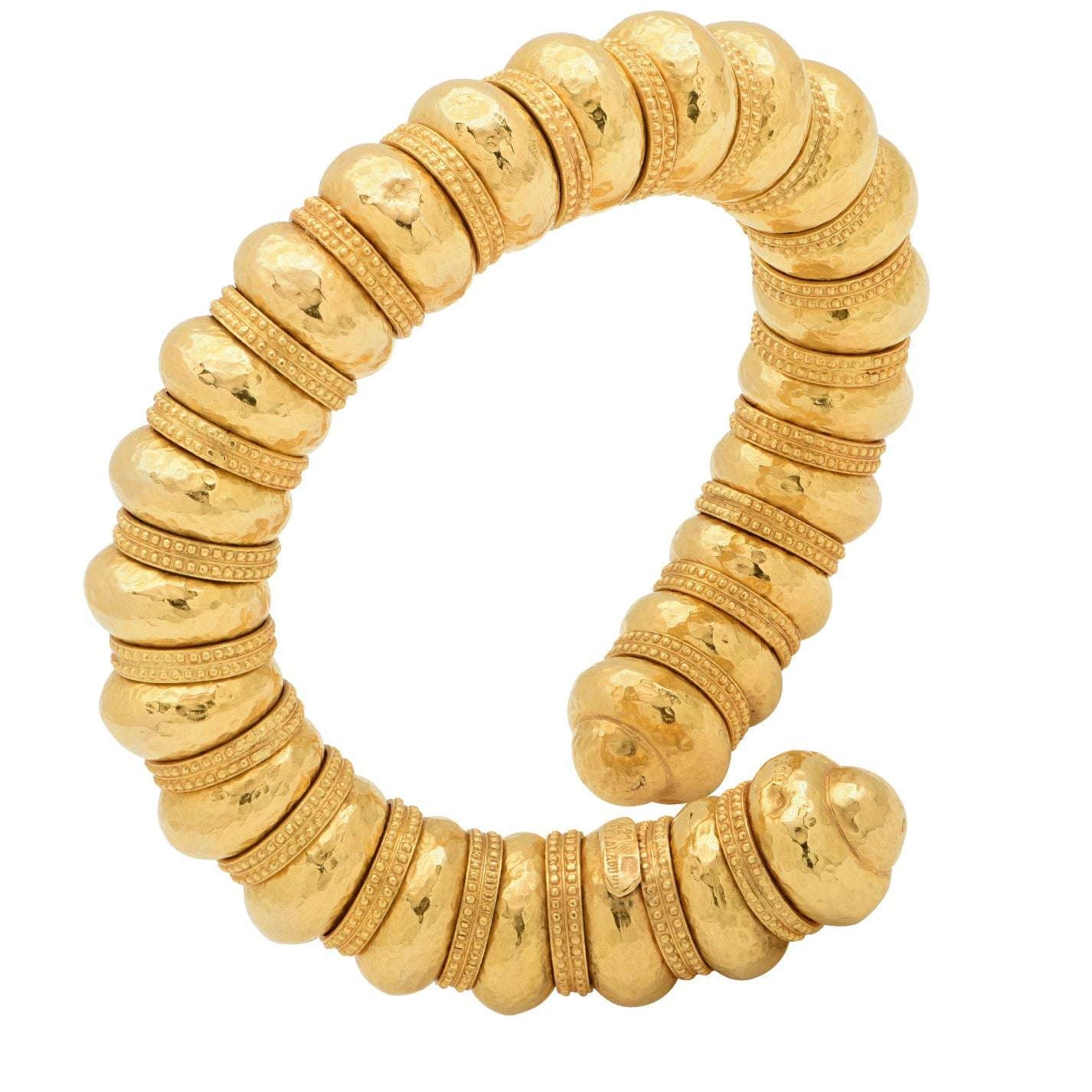
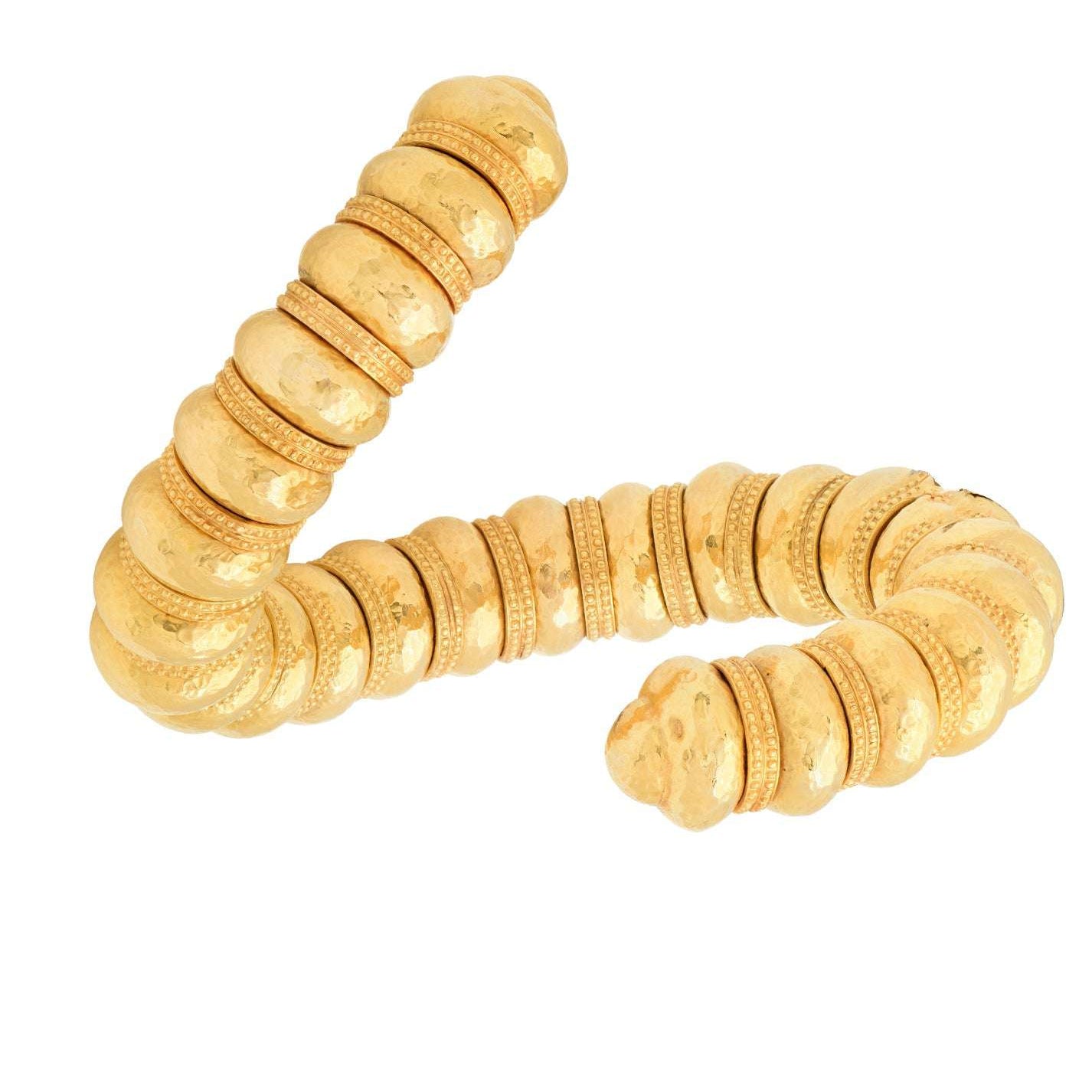
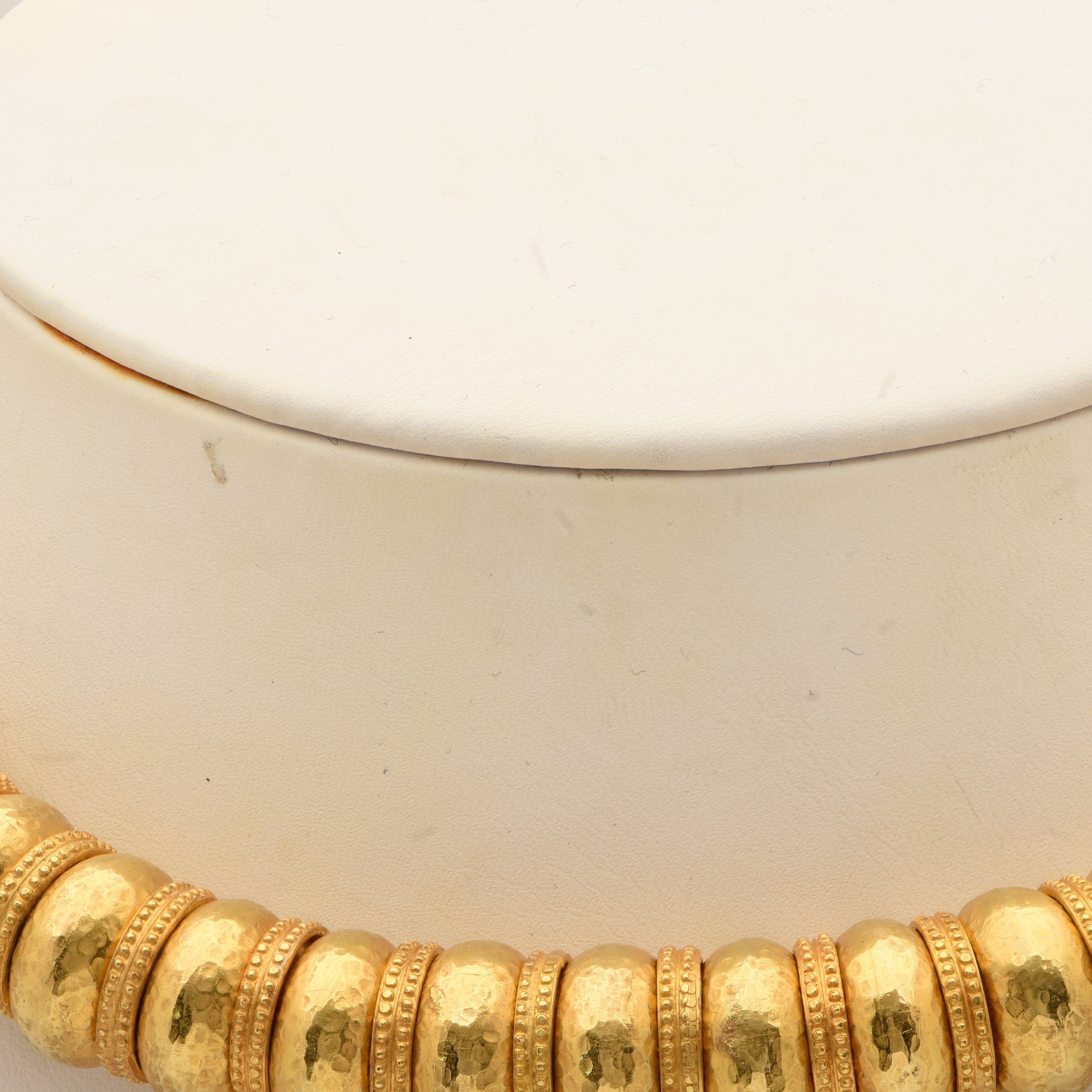
If you picture Lalaounis jewelry, you likely picture a collar. Rigid torcs with animal-head finals, articulated chokers with repoussé plaques, and broad collars with rope-twist borders form the house's most emblematic category. They sit close to the clavicle, read powerfully under a blazer or over a knit, and instantly anchor an ensemble. Many are engineered with subtle spring or hidden hinges so they're secure without feeling punitive on the neck.
Bangles, Cuffs, And Knot Motifs
Cuffs are where texture takes center stage. You'll find hammered gold with beaded rims, rope-twist borders, and figure-eight or Herakles knot motifs that reference strength and binding. Hinged bangles with ram or lion heads are collector favorites because they pair sculptural presence with practicality. Stack a textured cuff with a smoother bangle and you'll see how the house plays with light and shadow in gold alone, no gemstones required.
Earrings, Rings, And Statement Sets
From granulated button earrings to longer drops with amphora or cross motifs, earrings are a smart entry point into Lalaounis. Rings range from bold signet-like plaques to wrap-around serpents and woven-wire domes. Many vintage sets survive intact, earrings with matching pendant or cuff, because the house often conceived pieces as small ensembles. If you're building a collection, consider acquiring within a motif family (e.g., all knotted forms or all animal terminals) to keep your wardrobe coherent without feeling matchy.
Authenticity And Dating Your Piece
Hallmarks, Karat Marks, And Maker's Stamps
Start with the inside surfaces, clasps, and terminals. Authentic Lalaounis pieces are typically stamped with a maker's mark, "ILIAS LALAOUNIS" or "LALAOUNIS", and a fineness mark such as 750 (18k) or 916/22K for high-karat pieces. Some items also bear country-of-origin or export marks (e.g., "GREECE") and Greek assay hallmarks, which vary by era. Stamps should be crisp and proportionate, not laser-smooth or awkwardly placed. Remember that decades of wear can soften marks, especially on bracelets.
Craftsmanship Cues And Wear Patterns
Examine textures. Hand-hammered and brushed finishes have irregular, organic rhythms: machine-pressed textures look repetitive. Granulation should be fused, not glued: you shouldn't see adhesive residue. Hinges are usually neatly integrated, with tight tolerances and clean pin ends. On vintage pieces, expect honest patina in recesses and gentle softening of high points. Overly bright, mirror-like gold or suspiciously uniform surfaces on ostensibly older items can be a red flag.
Stylistic Periods And Construction Details
Earlier collections from the late 1960s–1970s often favor 22k tones, heavier textures, and robust animal terminals. Later decades see a broader mix of 18k pieces, occasional gemstone accents, and slightly lighter engineering for comfort. Clasps evolved too, from simple hooks on some collars to more secure box-and-safety systems. When possible, compare your piece to cataloged examples from the Ilias Lalaounis Jewelry Museum or period advertisements to anchor it in a timeframe.
Buying Guide And Market Insights
Price Ranges And Current Trends
As of today's market, you'll typically see:
- Earrings: roughly $1,500–$6,000 depending on size, technique, and karat.
- Rings: about $1,200–$8,000, with intricate granulation or animal motifs at the higher end.
- Cuffs and bangles: $4,000–$25,000+. Hinged ram- or lion-head designs command premiums.
- Torcs and collars: $10,000–$60,000+ based on width, articulation, and motif rarity.
Trends favor sculptural, gold-forward pieces. High-karat texture is in demand, and documented vintage examples continue to appreciate, especially those with distinctive animal terminals or museum-published counterparts. Condition and completeness (original paperwork or boxes) can nudge prices materially.
Where To Shop Safely
Your lowest-risk avenues are the house's own boutiques and the Ilias Lalaounis Jewelry Museum shop for current or archival-inspired designs. For vintage, use established auction houses and vetted dealers who specialize in signed jewelry. Online, prefer platforms that require authentication and offer buyer protection. Ask for macro photos of hallmarks, hinge shots, and, if available, service records. If you're investing at the higher end, consider a third-party appraisal familiar with Greek jewelry.
Collecting And Investment Considerations
Collect by motif or by technique to build depth: animal terminals, knot work, granulation-heavy pieces, or repoussé plaques. Scarcer, larger-scale items, broad collars, complex hinged cuffs, tend to outperform smaller items over time. That said, buy what you'll wear: Lalaounis rewards time on the body. Keep boxes, receipts, and any exhibition or catalog references together. Periodically verify insurance valuations: high-karat gold and signed heritage design are both tailwinds in today's market.
Styling And Care
Pairing High-Karat Gold With Modern Wardrobes
You can treat Lalaounis as your outfit's architecture. A torc under a crisp white shirt sits like a gold collar stay: a hammered cuff turns a simple knit into a deliberate look. High-karat gold plays beautifully with navy, black, cream, and olive. If you mix metals, let Lalaounis lead, add a thin white-gold band or steel watch as contrast, but keep the focal point in that warm, Greek glow. For evening, pair a collar with matching earrings and skip a ring to avoid visual clutter. For day, choose one statement (cuff or earring) and let textures carry the conversation.
Cleaning, Storage, And Maintenance For 18k–22k Gold
High-karat gold is relatively soft: its beauty is in the surface. Clean with lukewarm water, a drop of mild soap, and a soft brush: rinse and pat dry. Avoid abrasive cloths and harsh chemicals that can flatten texture or haze stones like turquoise, coral, or pearls sometimes used in Byzantine-inspired pieces. Store individually in soft pouches to prevent rub wear: collars prefer a flat box to protect their curvature. Skip ultrasonic cleaners on textured or stone-set items. If a hinge loosens or a texture needs reviving, use the house's service or a bench jeweler experienced with hand-textured, high-karat work. Better a brief pause in wearing than irreversible polish loss.
Conclusion
Lalaounis jewelry isn't merely gold, it's a living archive you can wear. When you understand the language of its textures, the logic of its motifs, and the practicalities of hallmarks and construction, you buy more confidently and wear more boldly. Let heritage guide you, but let your life mark the metal. That's how Greek antiquity becomes personal: not behind glass, but on your wrist, at your throat, and in your rotation for years to come.
Frequently Asked Questions
What defines Lalaounis jewelry design and craftsmanship?
Lalaounis jewelry blends Hellenistic and Byzantine inspirations with revived ancient techniques. Expect high-karat gold (18k–22k), hand-hammered textures, granulation, filigree, repoussé, and clean, integrated hinges. Motifs include rams, lions, serpents, crosses, and laurel forms—architectural, wearable, and meticulously hand-finished for a warm, matte glow that develops graceful patina.
How do I authenticate and date a Lalaounis piece?
Check for maker’s marks (“ILIAS LALAOUNIS” or “LALAOUNIS”), fineness stamps like 750 or 916/22K, and Greek assay or origin marks. Assess hand-wrought textures, fused (not glued) granulation, and tidy hinge construction. Earlier pieces skew 22k with heavier textures. Compare to Ilias Lalaounis Jewelry Museum catalogs for period alignment.
What does Lalaounis jewelry typically cost, and what affects price?
As a guide: earrings $1,500–$6,000; rings $1,200–$8,000; cuffs/bangles $4,000–$25,000+; torcs/collars $10,000–$60,000+. Premiums follow scale, complexity, animal terminals, documented provenance, and condition. Original boxes/papers help. Sculptural, gold-forward pieces and museum-published designs trend higher as high-karat textures remain in demand.
How should I wear and care for high-karat Lalaounis jewelry?
Let one statement piece lead—torc, cuff, or granulated earrings—paired with clean lines in navy, black, cream, or olive. Clean with lukewarm water, mild soap, and a soft brush; pat dry. Avoid abrasives, harsh chemicals, ultrasonics, and crowding in storage. Keep collars flat; use experienced goldsmiths for hinge or texture service.
Is Lalaounis jewelry a good investment compared to other heritage gold houses?
Generally yes, especially larger, documented, high-karat pieces with animal terminals or complex handwork. Lalaounis benefits from museum archives, steady collector demand, and gold’s intrinsic value. Liquidity is solid via major auctions and vetted dealers. As with any heritage brand, condition, rarity, completeness, and tasteful wear strongly influence outcomes.