Rubies



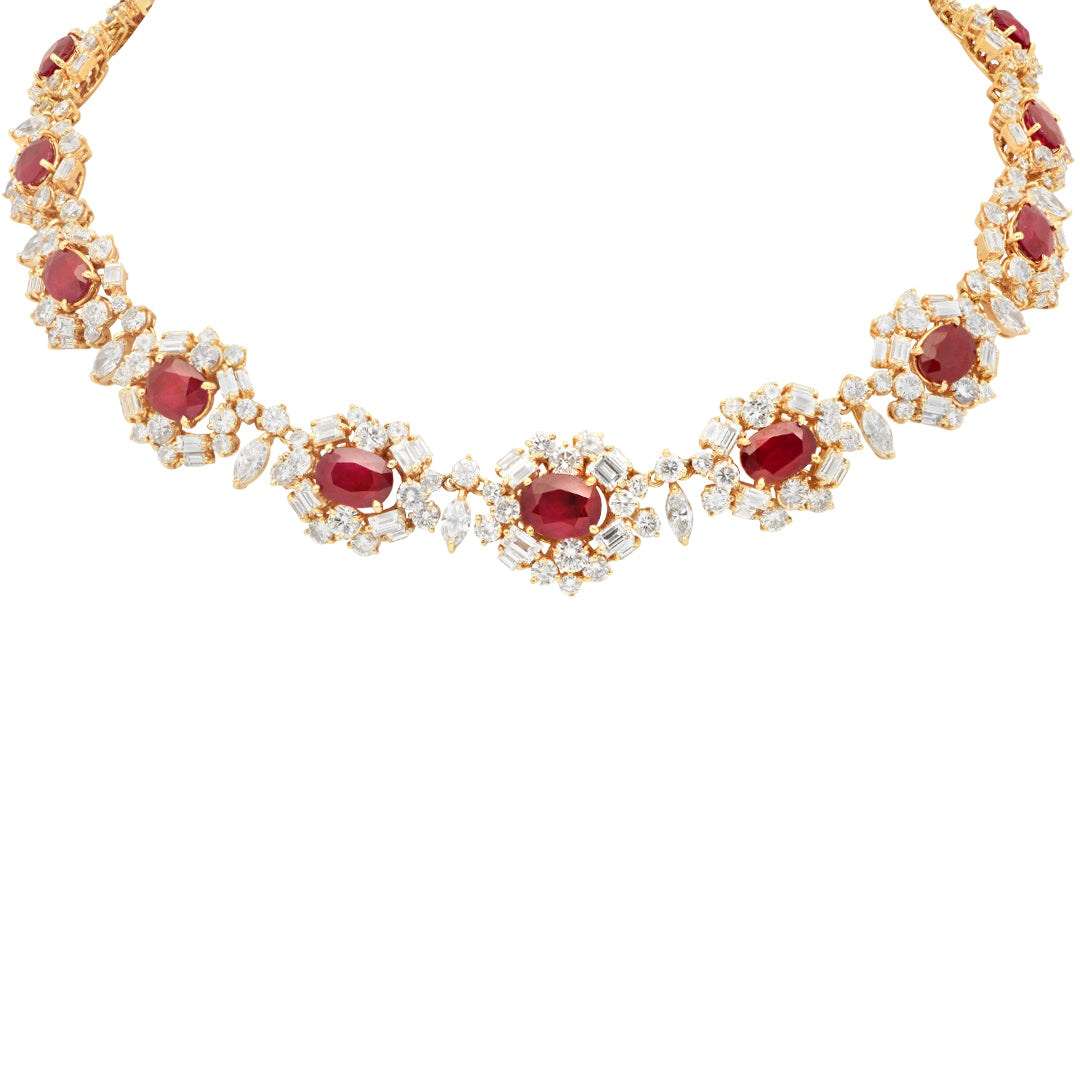
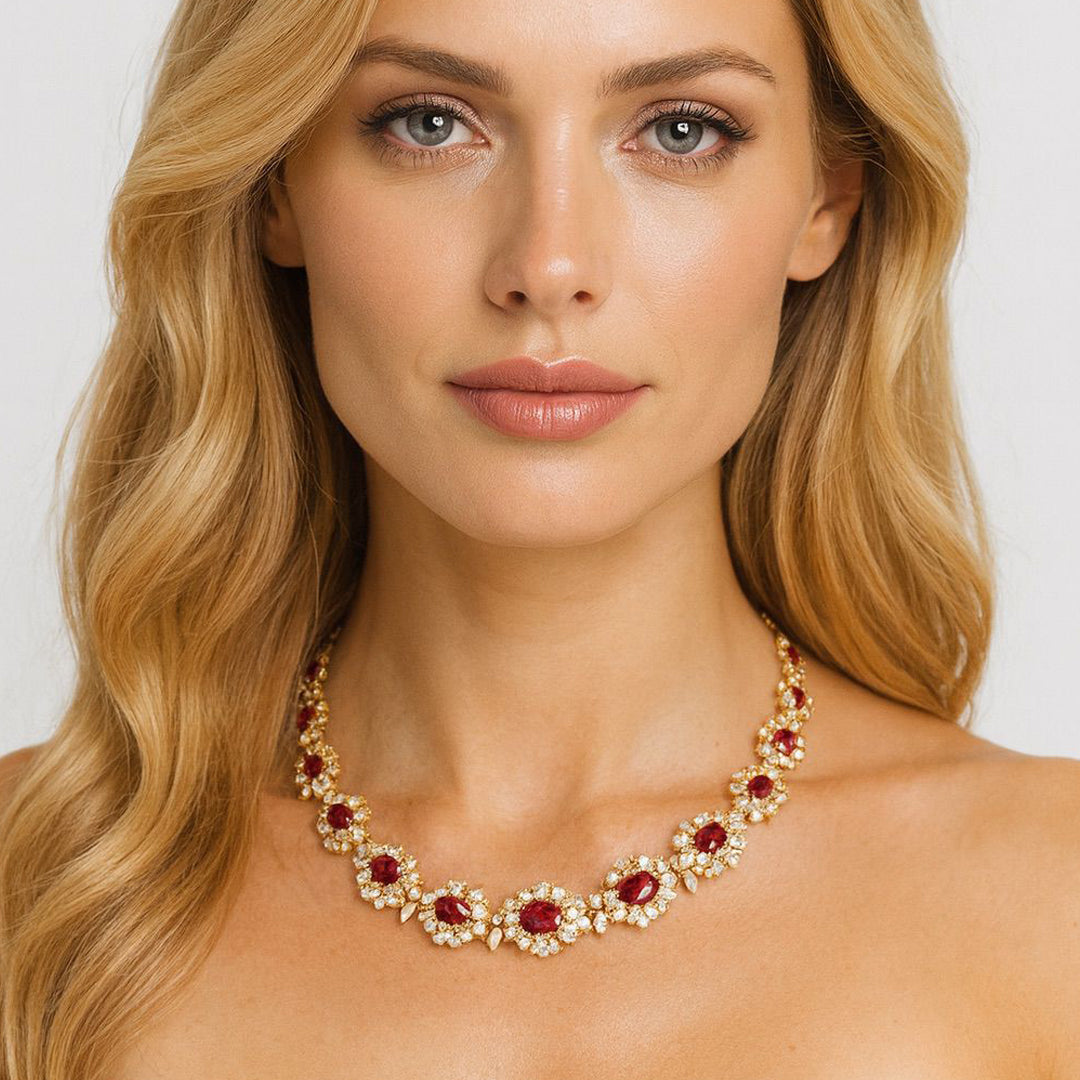
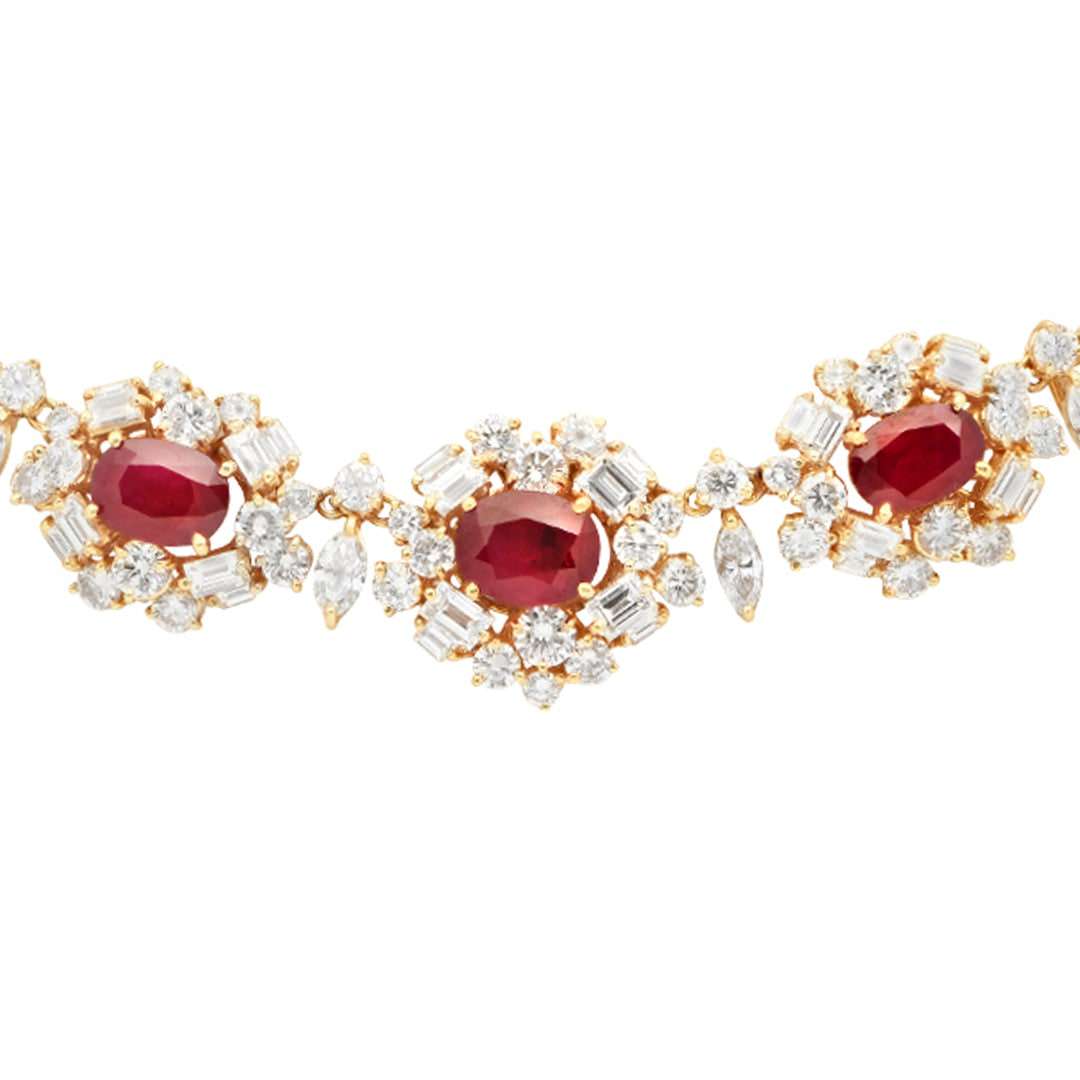
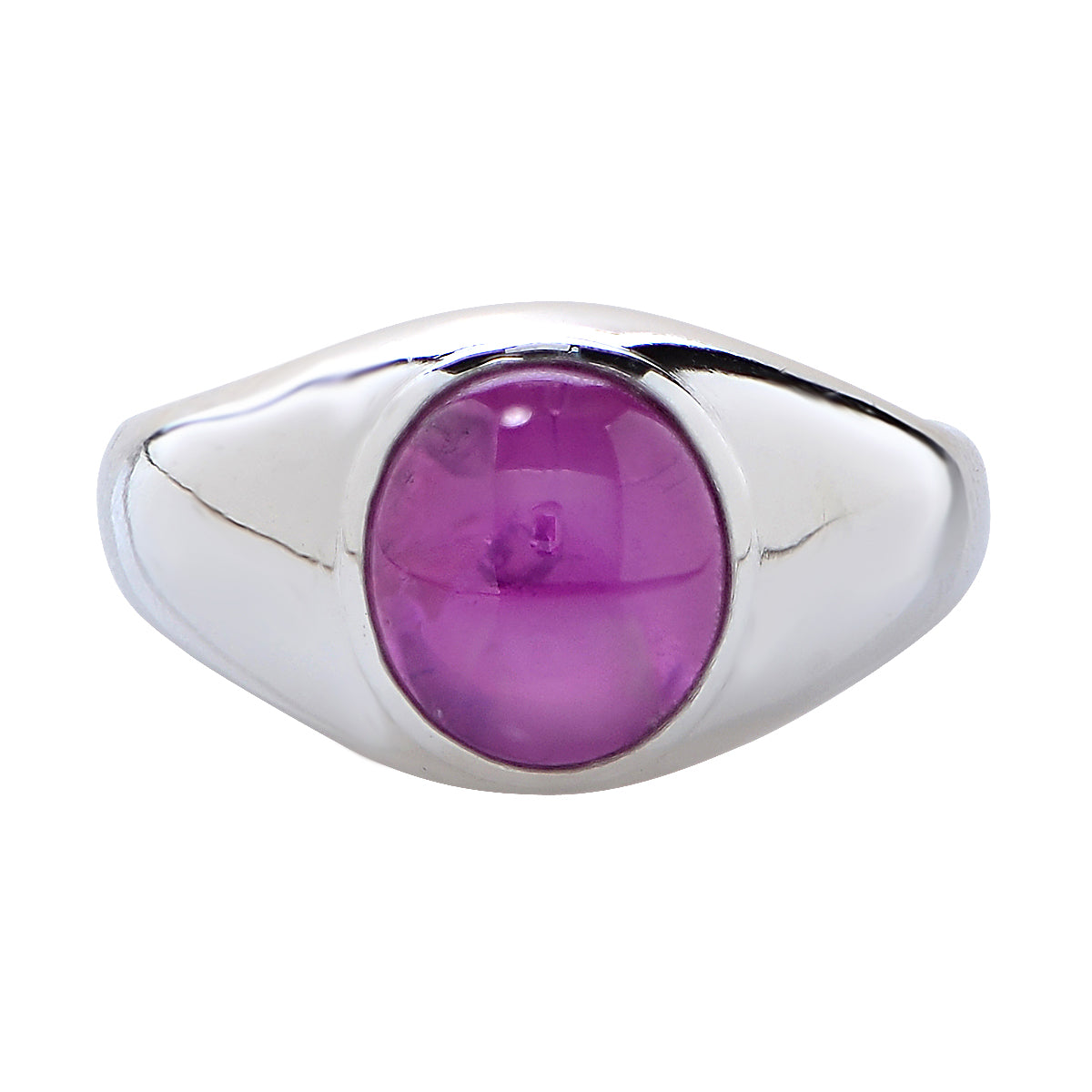
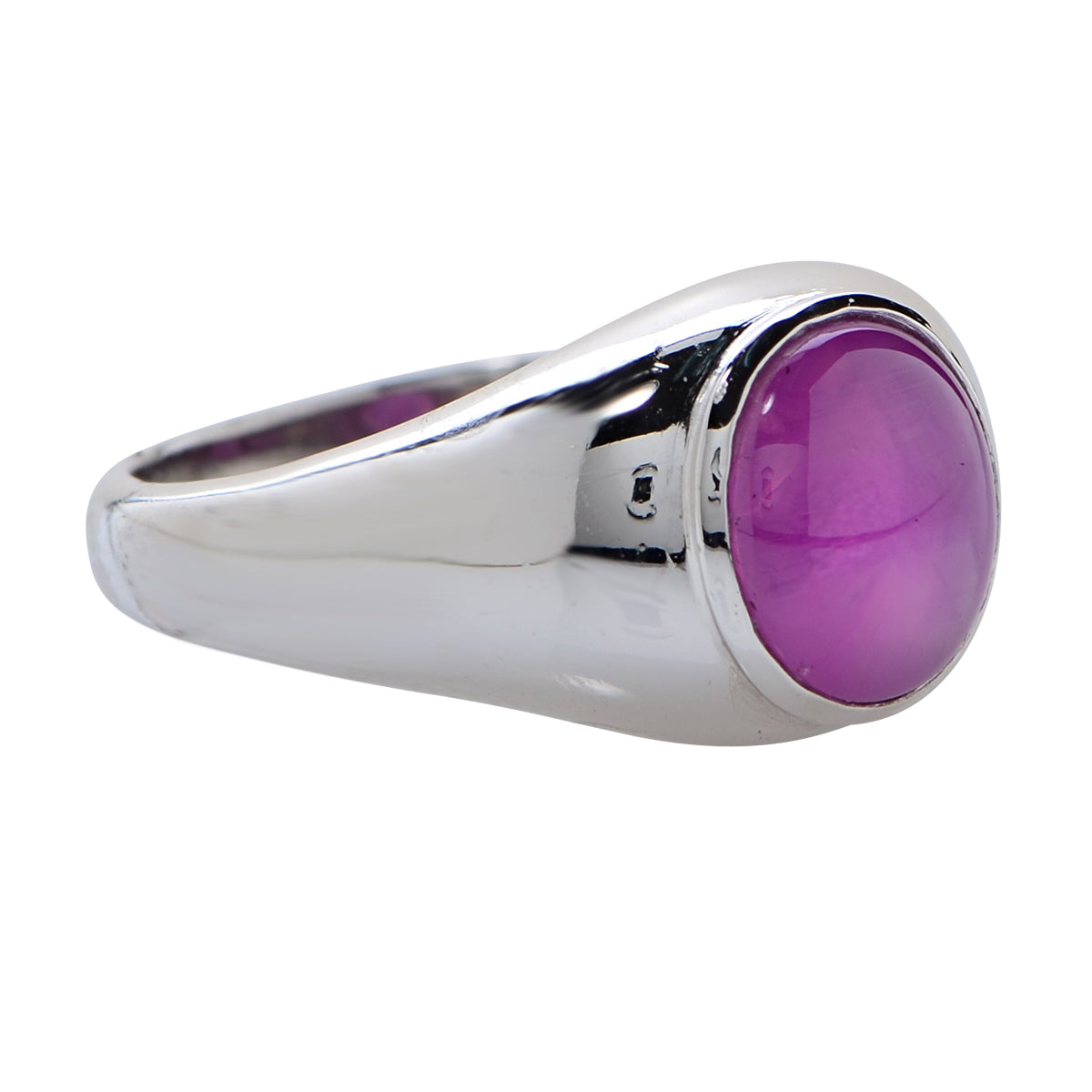
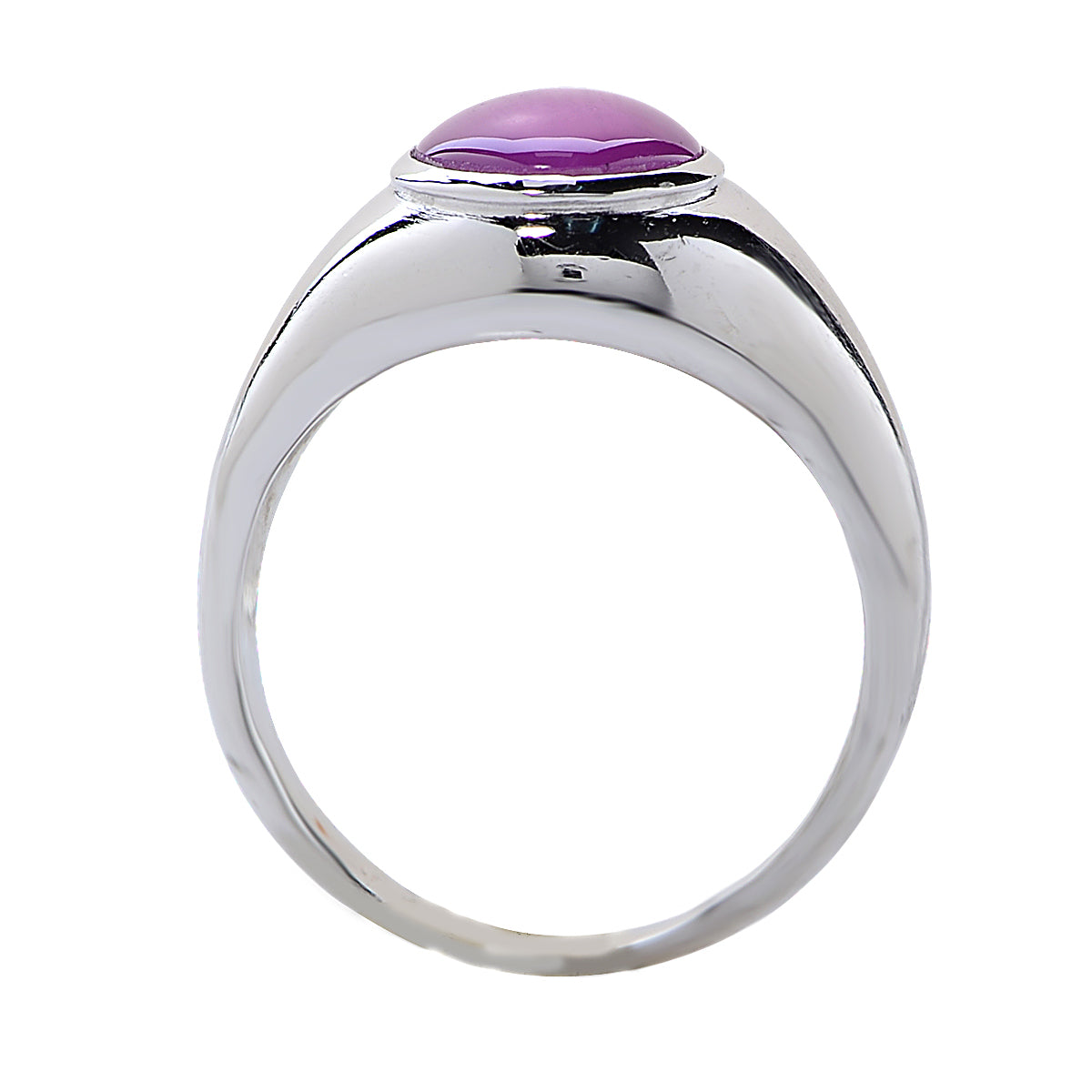
Ruby Gemstone Jewelry: A Complete Guide To Choosing, Wearing, And Caring
Ruby gemstone jewelry has a way of stopping you in your tracks. That saturated red, alive with warmth and fire, carries stories of love, courage, and celebration. Whether you're eyeing your first ruby ring or weighing a once‑in‑a‑lifetime heirloom, this guide helps you choose confidently, style it beautifully, and care for it so the glow lasts a lifetime.
What Makes Ruby Unique
Color And Clarity
Ruby is the red variety of corundum, colored by trace chromium. That chromium does two things you'll notice immediately: it creates a rich, vibrant red and often a soft, glowing fluorescence under daylight or UV that makes the stone look "lit from within." The most prized rubies sit in a vivid, slightly purplish to pure red range with strong saturation and medium to medium‑dark tone, think ripe cherry to velvet red. You'll also hear the romantic term "pigeon's blood," typically used for the most vivid, medium‑toned reds with a touch of fluorescence.
Clarity in rubies is different than in diamonds. You should expect some inclusions, fine "silk" of rutile needles, tiny crystals, or wispy veils, because perfectly clean natural rubies are rare. A few internal features are fine if they don't cloud the stone or break the surface. What matters most is how the inclusions affect transparency and the overall glow. If a ruby looks lively across the face and the inclusions don't jump out to your eye, you're probably in a good zone.
Hardness And Durability
On the Mohs scale, ruby is a 9, second only to diamond in common jewelry gemstones. That means excellent scratch resistance and a strong candidate for everyday jewelry like engagement rings. But durability isn't just hardness. Avoid sharp blows, especially near thin edges or pointed corners in fancy shapes, and steer clear of extreme heat when you don't know a stone's treatment status. Set well and cared for, ruby is a lifetime piece.
Origins And Value Impact
Origin can influence price because certain regions are famous for distinct looks. Historically, Myanmar (Burma) produced rubies with lush color and soft fluorescence: today, Mozambique is a major source for vivid, clean stones, and you'll also see quality gems from Madagascar, Vietnam, and Thailand. A credible lab report noting origin can add to value, especially for fine stones. Still, remember: color and overall beauty drive price first: origin is a premium on top of excellence.
Types Of Rubies And Common Treatments
Natural Vs. Lab-Grown
Natural rubies formed over millions of years in the earth. Lab‑grown (synthetic) rubies are real rubies too, same chemistry and crystal structure, but grown in a controlled environment. You'll typically get higher clarity and consistent color for a fraction of the price. If you love the look and want bigger sparkle per dollar, lab‑grown is a smart option: if rarity and natural history matter to you, go natural.
Heat Treatment
Heat treatment is the most common enhancement and widely accepted in the trade. Gentle to high heat can dissolve rutile "silk," improve clarity, and deepen color. Properly heated rubies are durable and suitable for everyday wear. Pricing reflects it: unheated rubies of top color command significant premiums over equivalent heated stones. A reputable lab can determine whether a ruby shows evidence of heat.
Lead-Glass–Filled And Composite Rubies
These are lower‑grade rubies or corundum fragments filled with high‑lead glass to improve transparency and appearance. They often look striking at first glance, high clarity, bright color, but they're not durable like natural or simply heat‑treated rubies. They can be damaged by household chemicals, ultrasonic cleaners, or even a jeweler's torch. Prices are much lower, and disclosure is essential. If you see an unusually large, "clean," and inexpensive ruby, assume it might be glass‑filled or composite.
How To Spot Treatments
- Ask directly and get it in writing. Any reputable jeweler should disclose treatments.
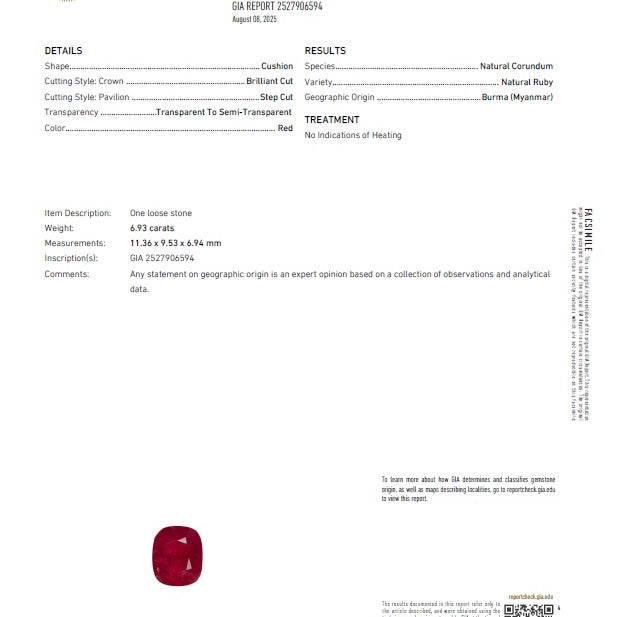
- Review a lab report from a recognized lab if the stone is significant. Look for notes like "Evidence of heat" or "Lead‑glass–filled."
- Visual cues: glass‑filled rubies may show flash effects (rainbow‑like flashes) at fracture edges, bubble‑like inclusions, or a too‑perfect clarity that doesn't match the price.
- Be wary of vague terms like "enhanced" without details. You deserve specifics.
Popular Ruby Jewelry Styles And Settings
Rings: Solitaires, Halos, And Three-Stone Designs
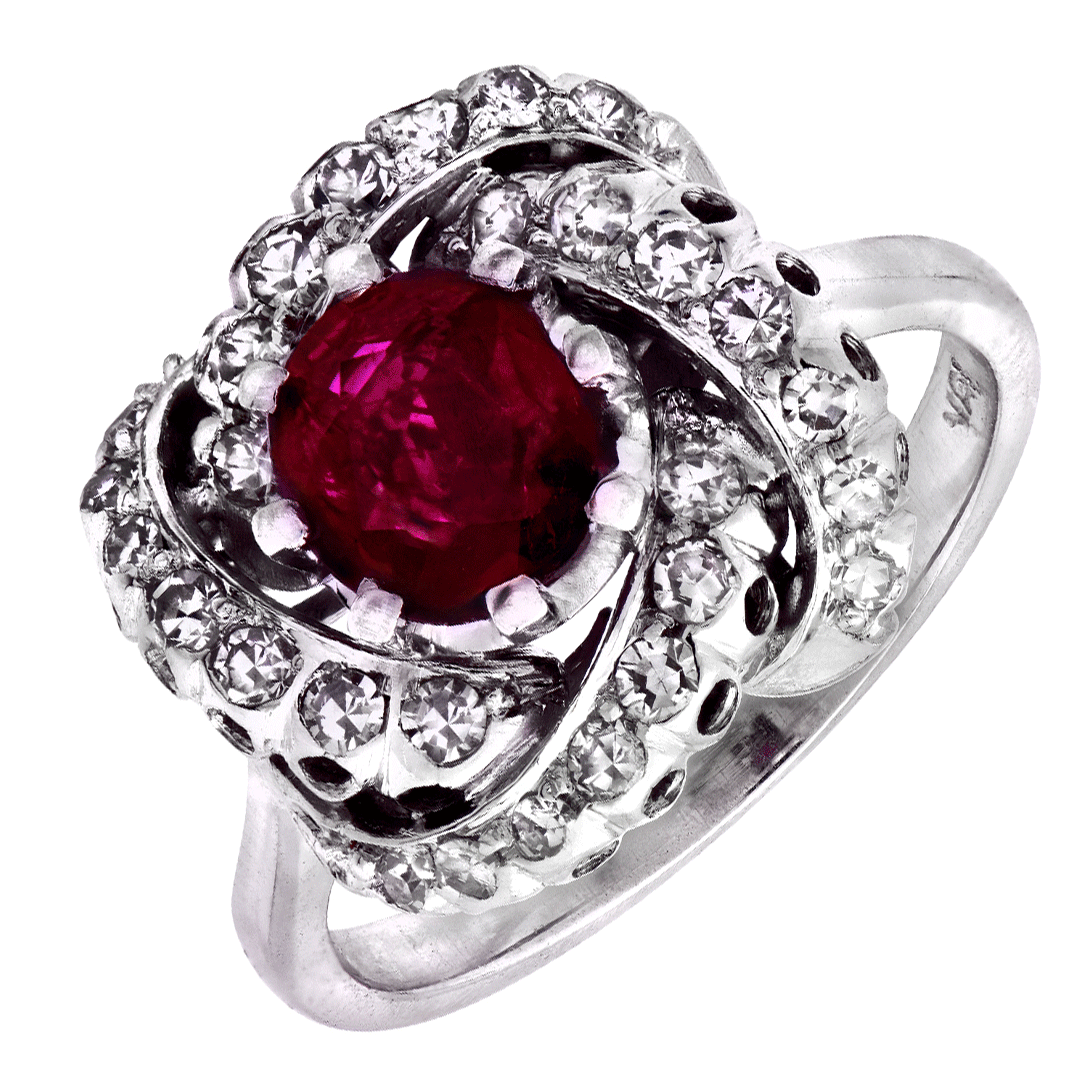
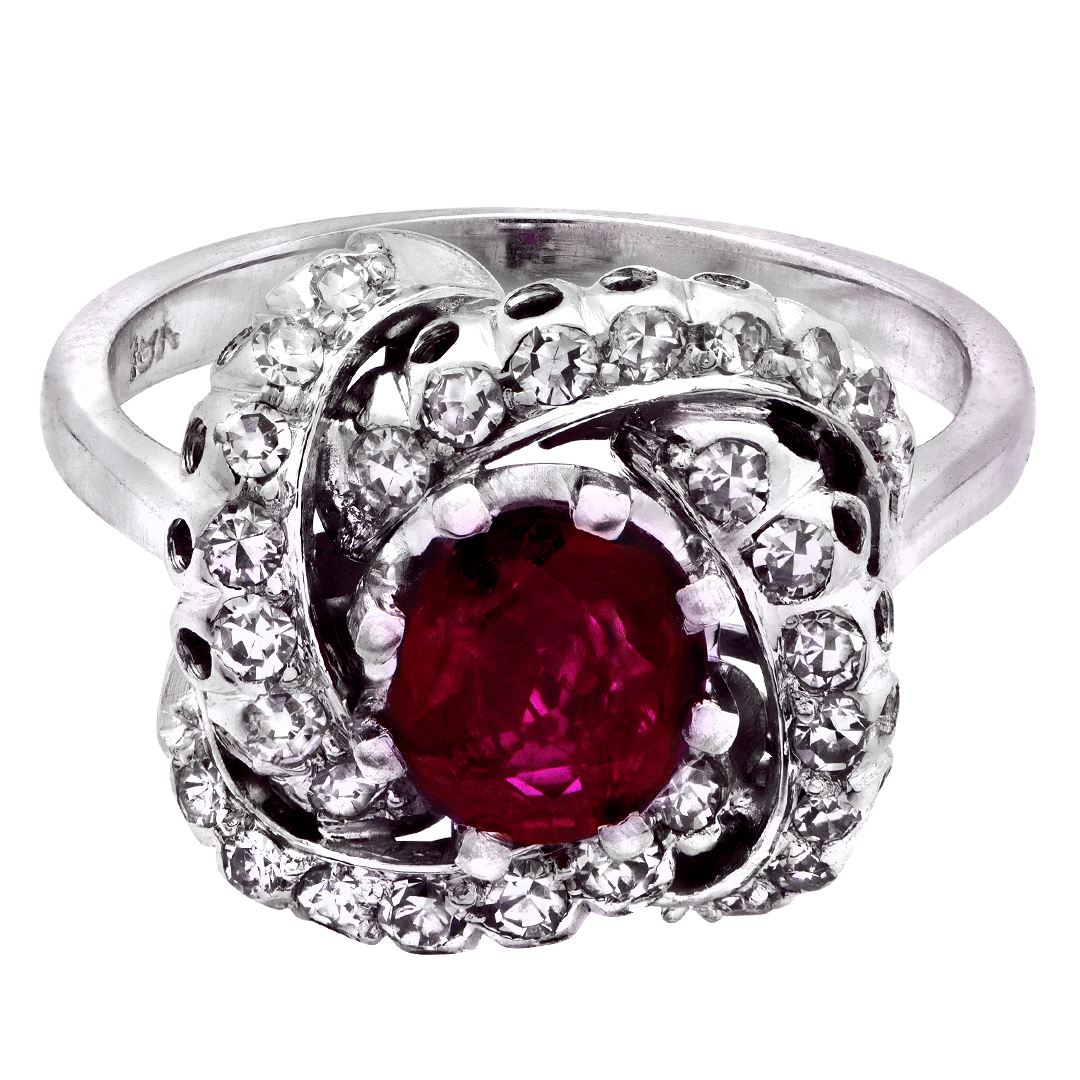
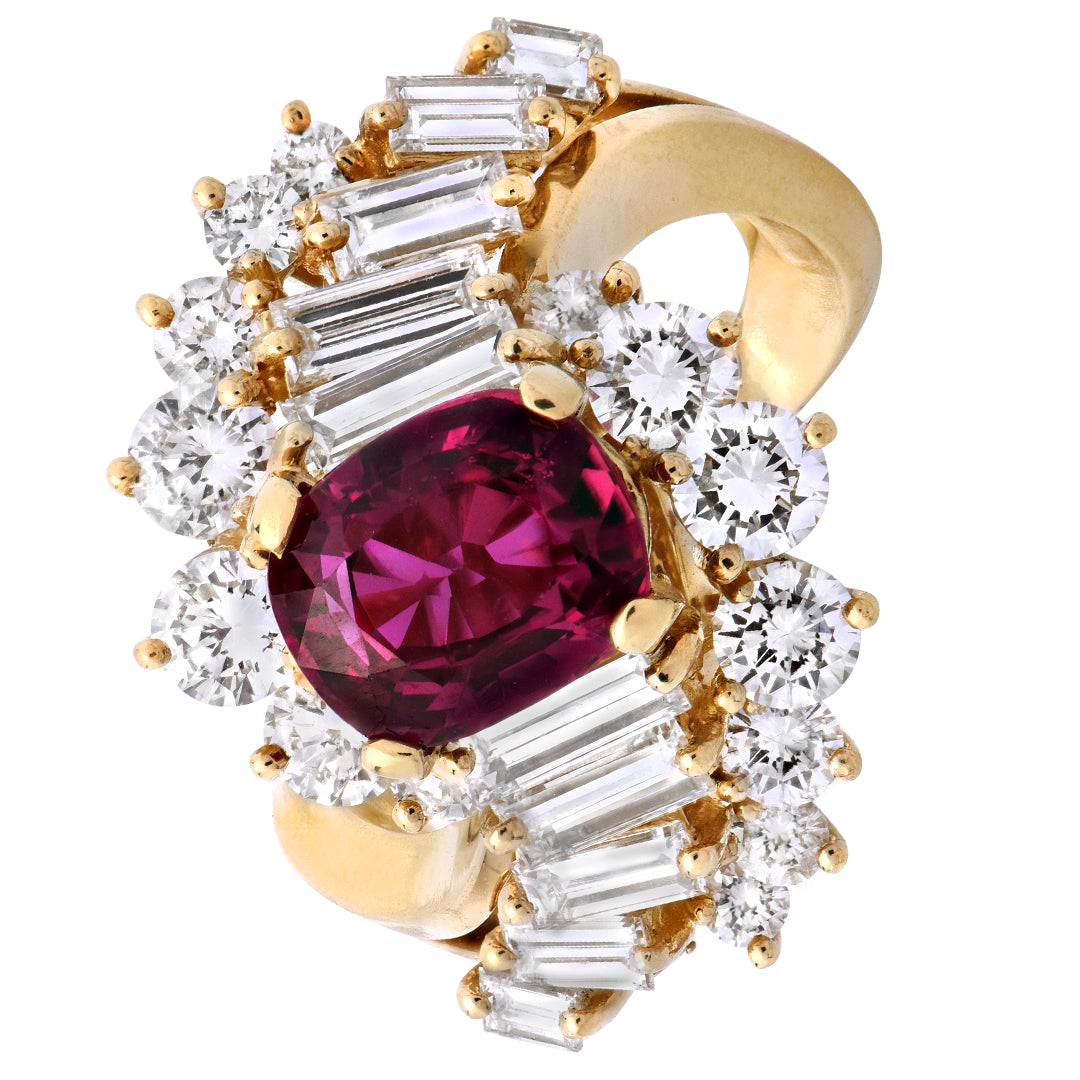
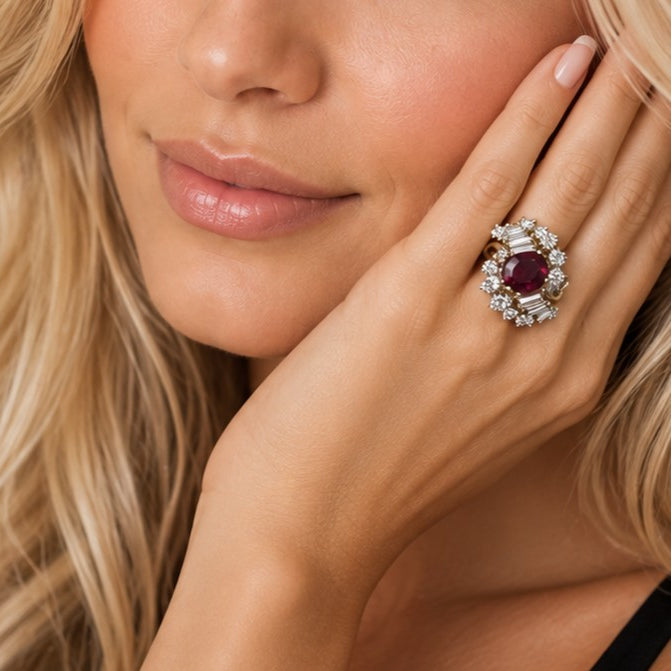
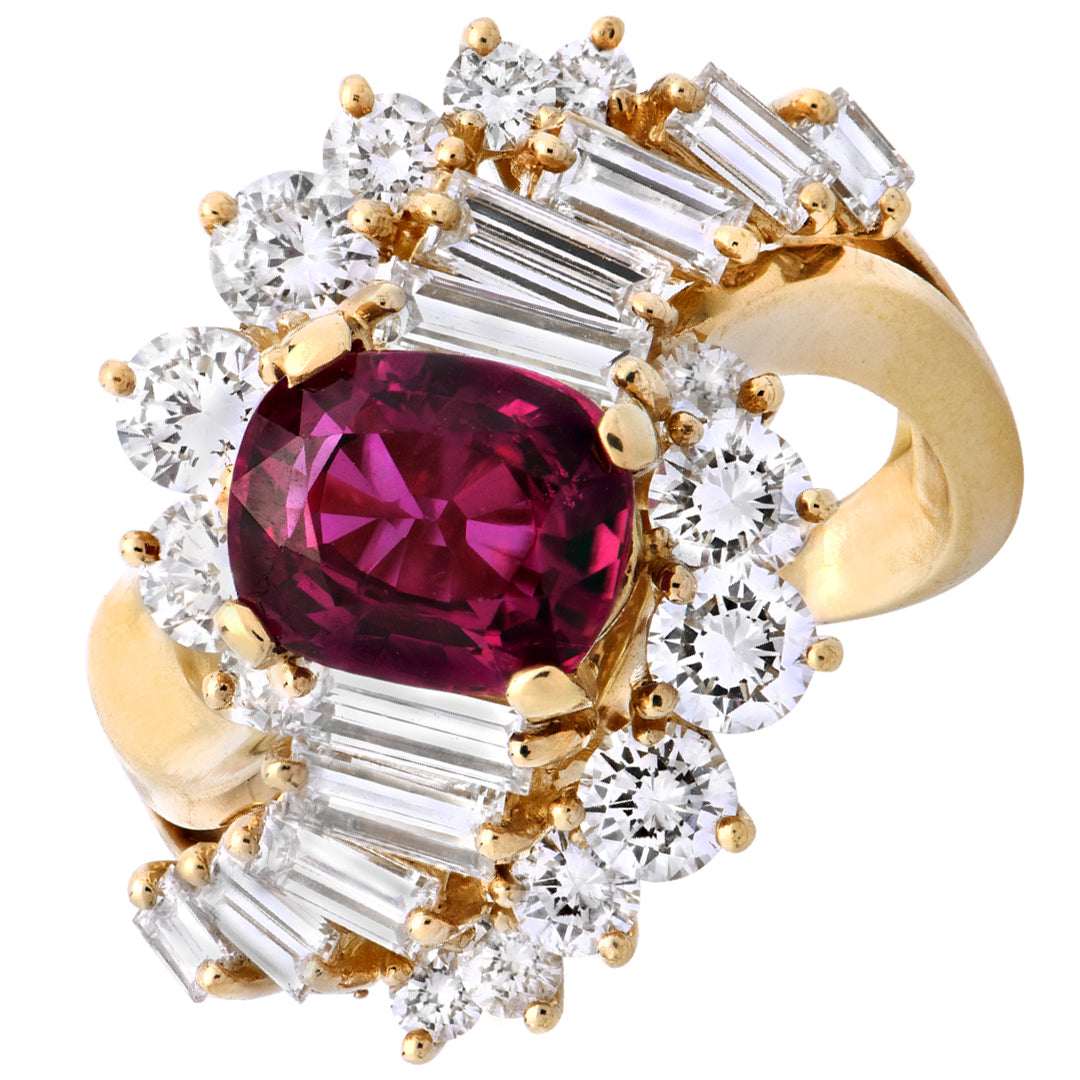
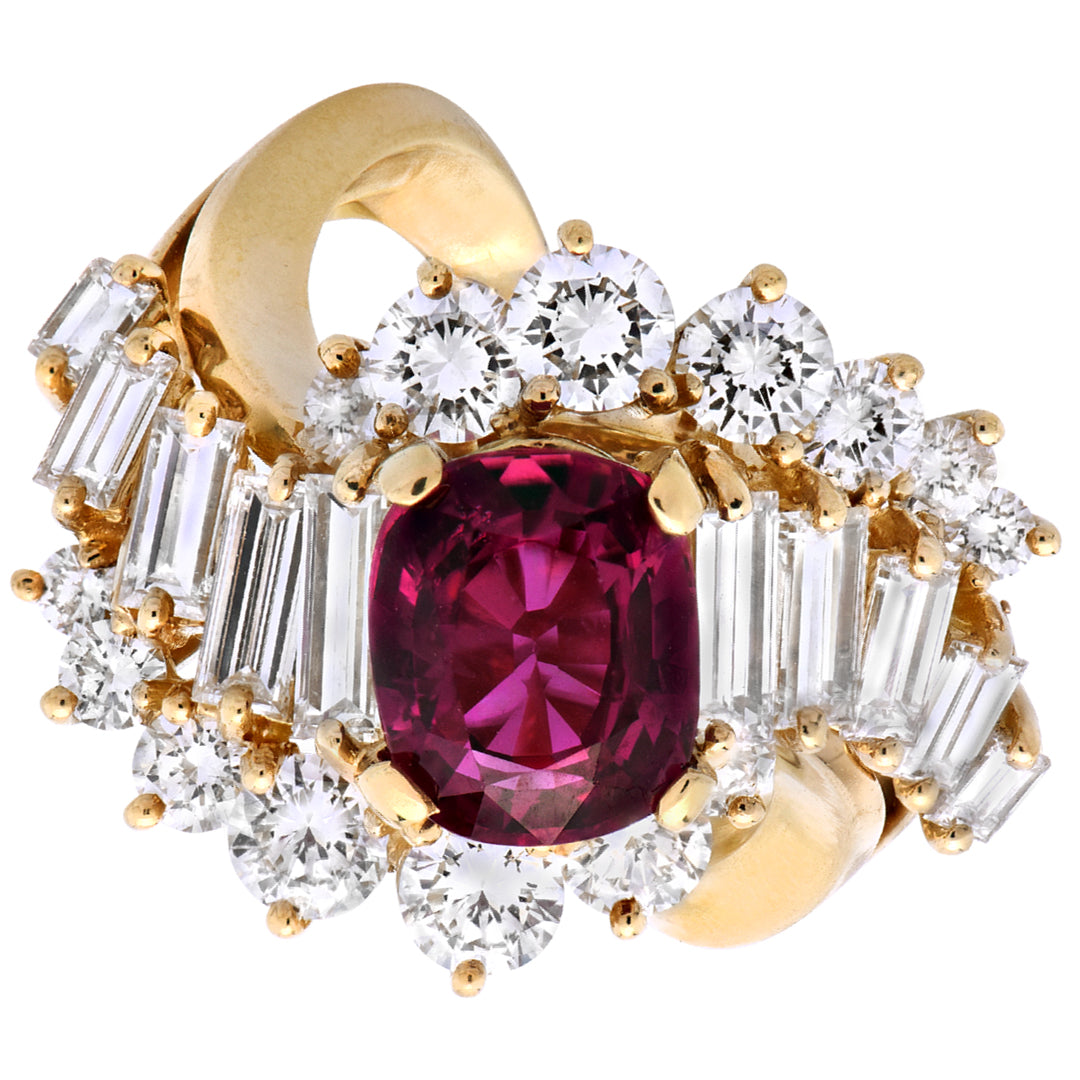
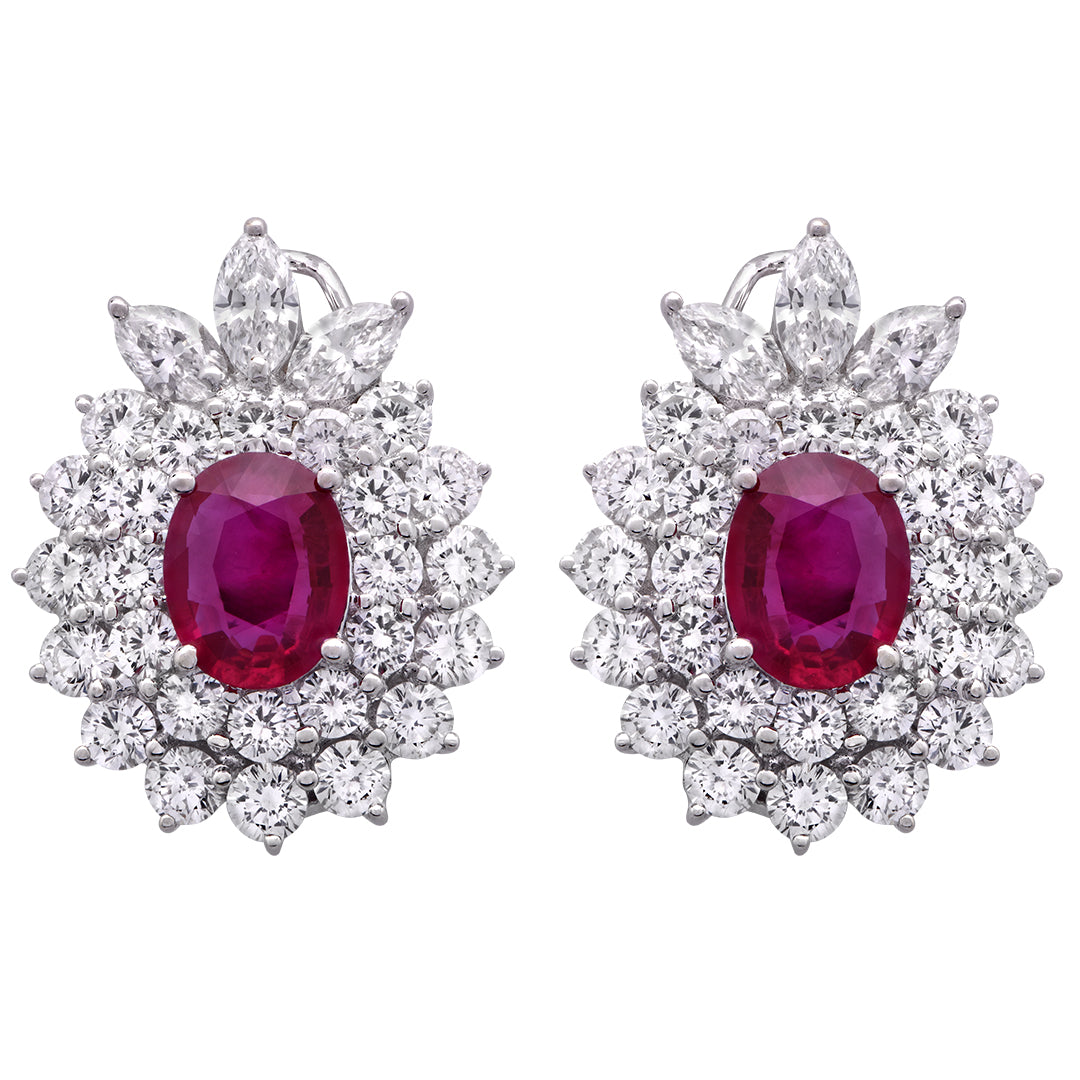
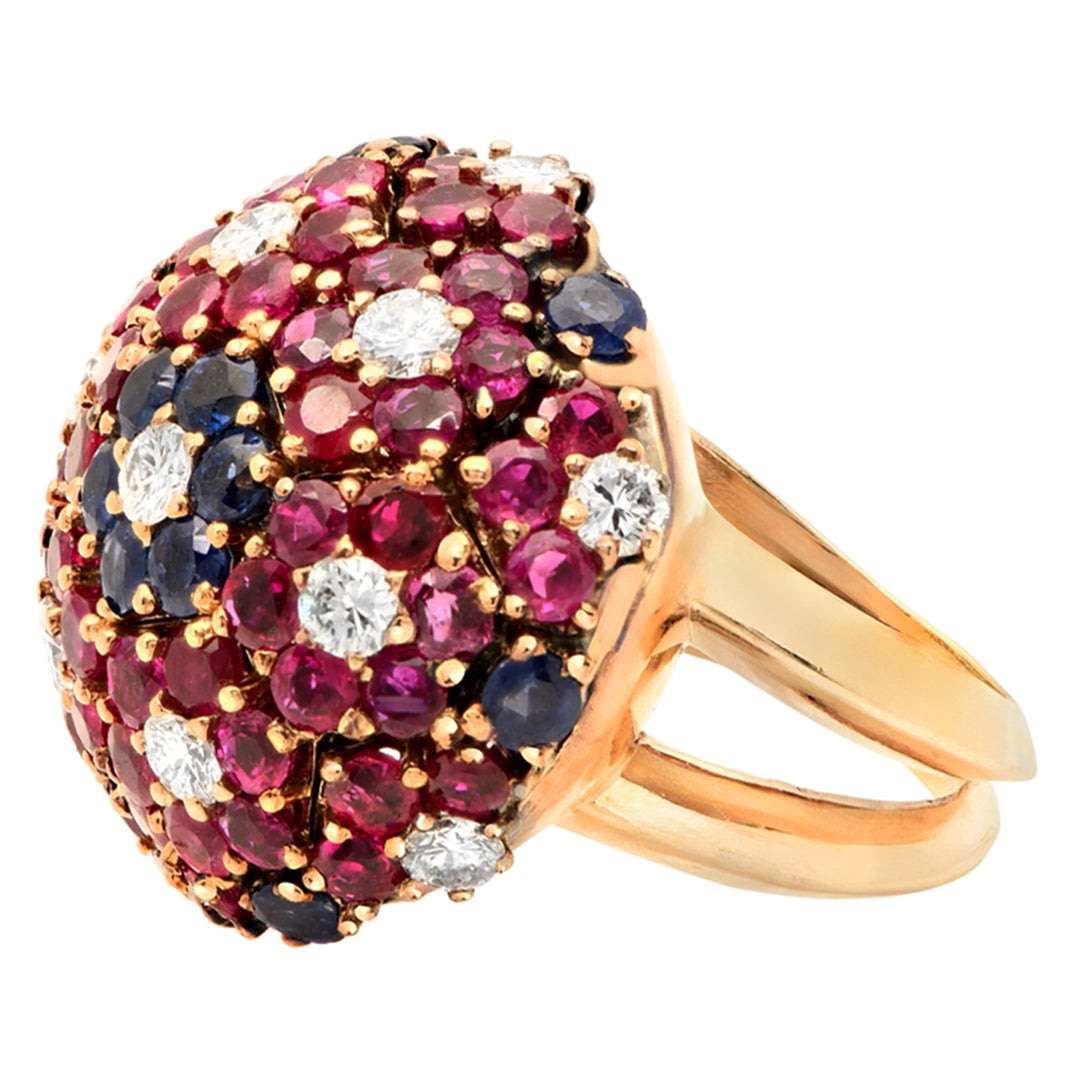
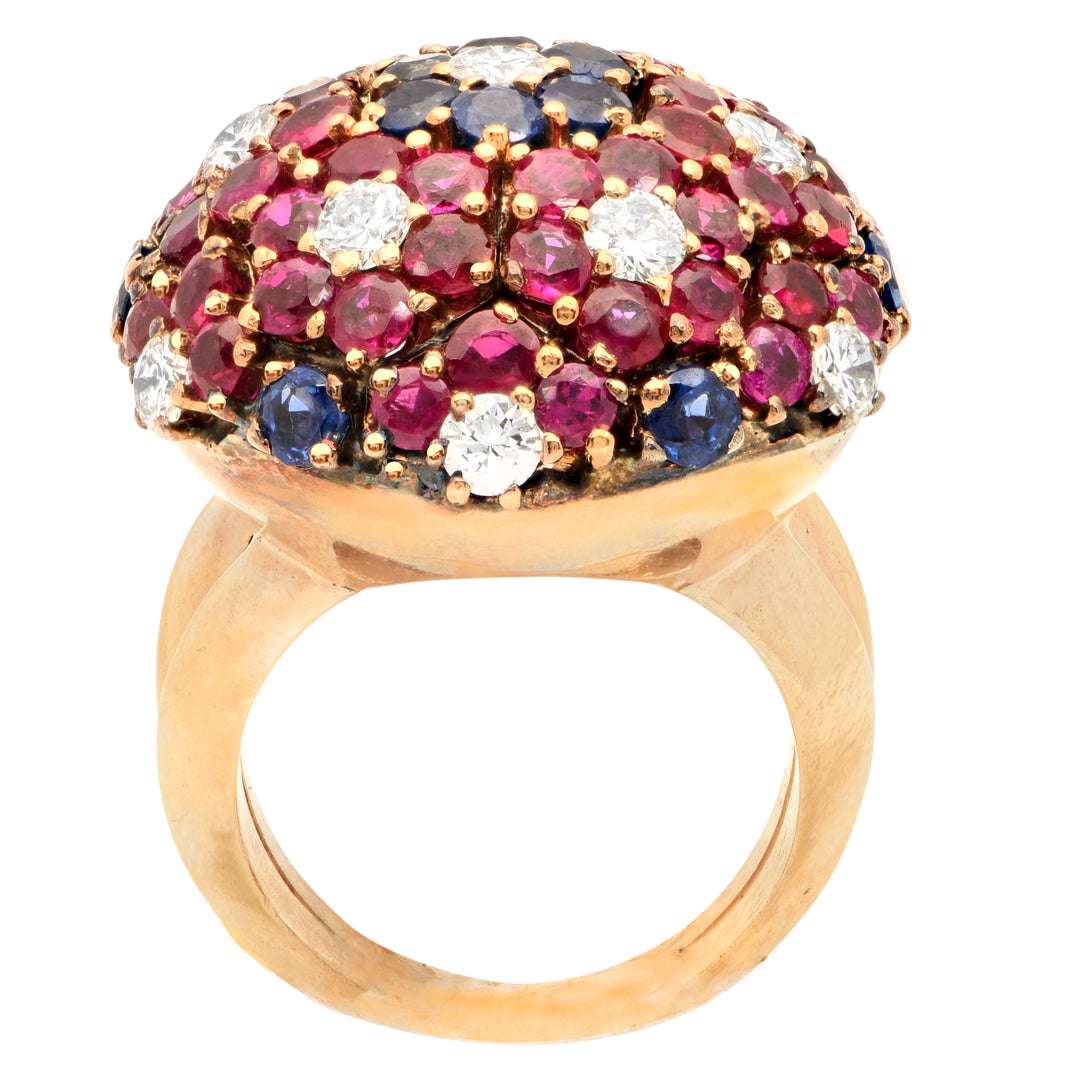
A classic ruby solitaire ring lets color take center stage, clean prongs, low profile, all eyes on the gem. Halos (ruby center with a diamond halo) amp up sparkle and make the center look larger. Three‑stone rings, ruby flanked by diamonds or white sapphires, balance color and brilliance with a dash of symbolism (past, present, future). For everyday wear, consider protective settings like bezels or semi‑bezels, especially if you're hard on your hands.
Necklaces And Pendants
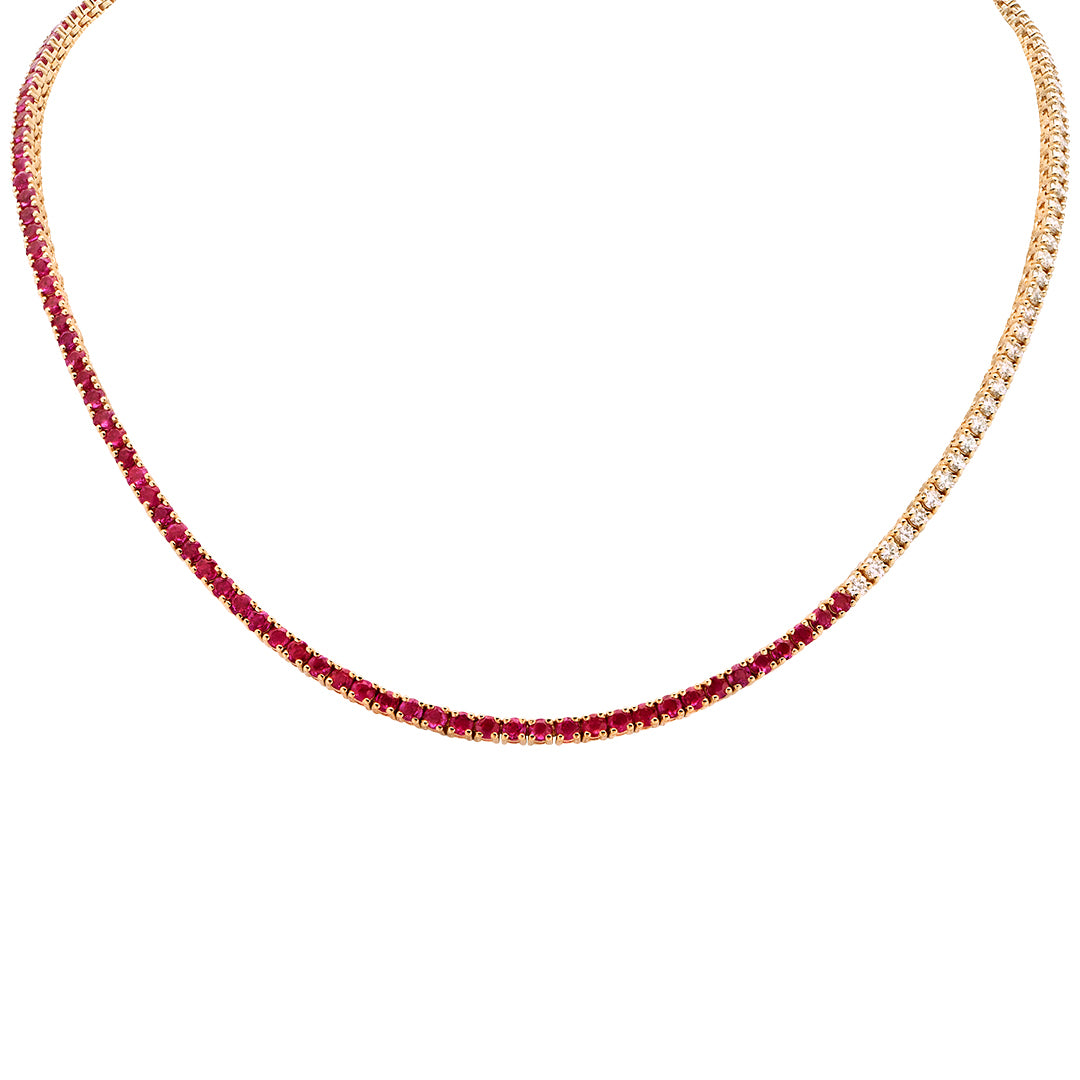
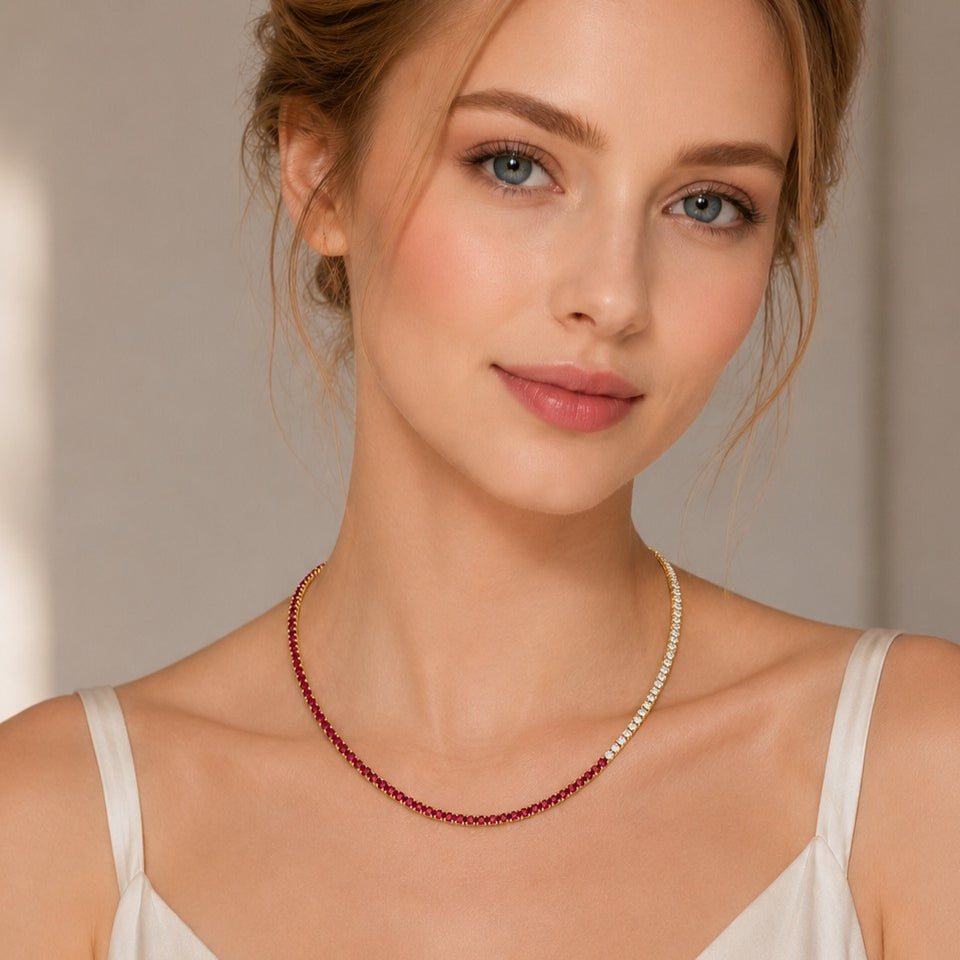
A simple ruby pendant on a fine chain is the definition of effortless. Ovals and cushions sit nicely at the collarbone: a pear shape elongates the neckline. Station necklaces with scattered small rubies add quiet luxury, while a full rivière of matched stones turns heads. If you're layering, mix lengths and textures, paperclip chain with a delicate pavé‑set ruby drop is an easy win.
Earrings And Bracelets
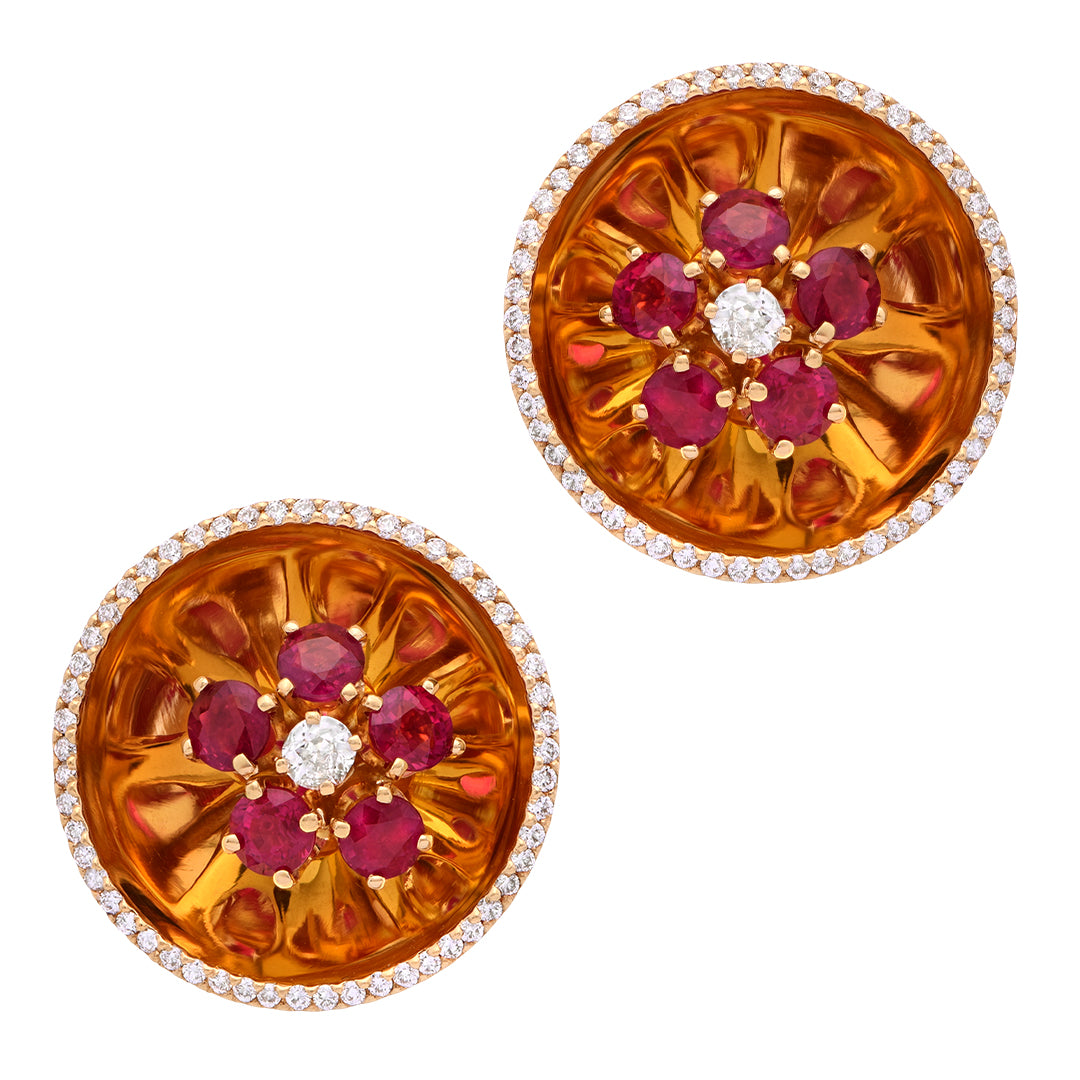
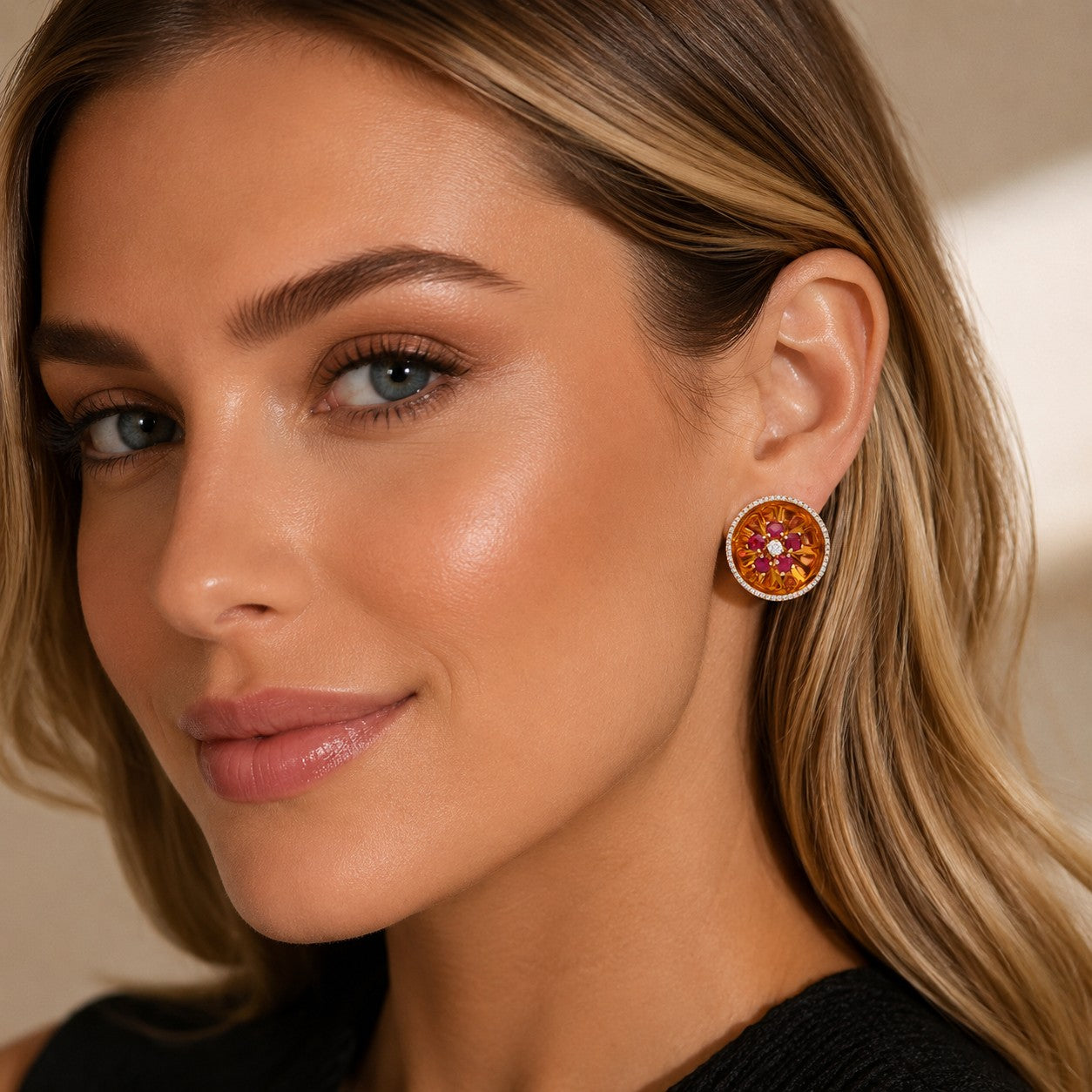
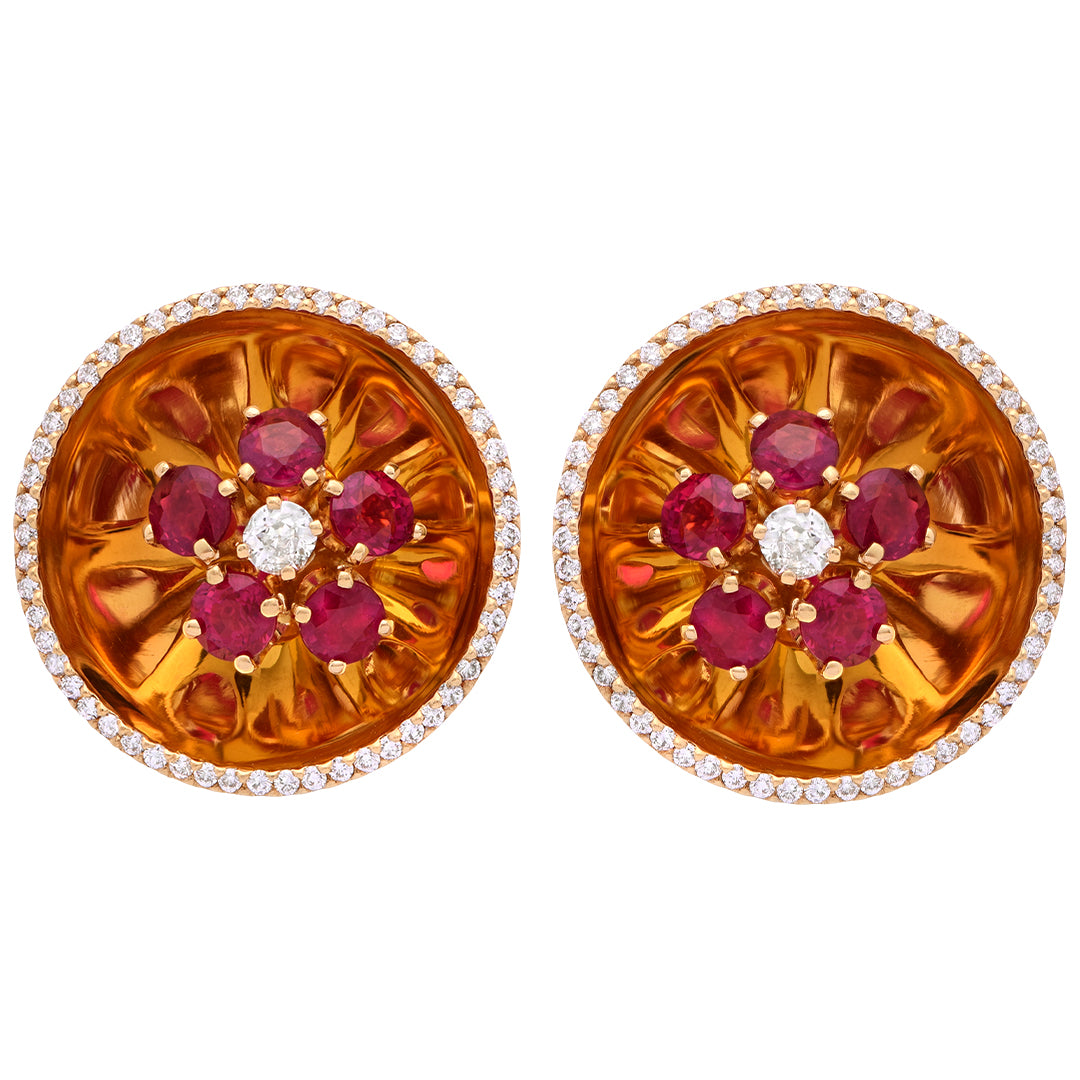
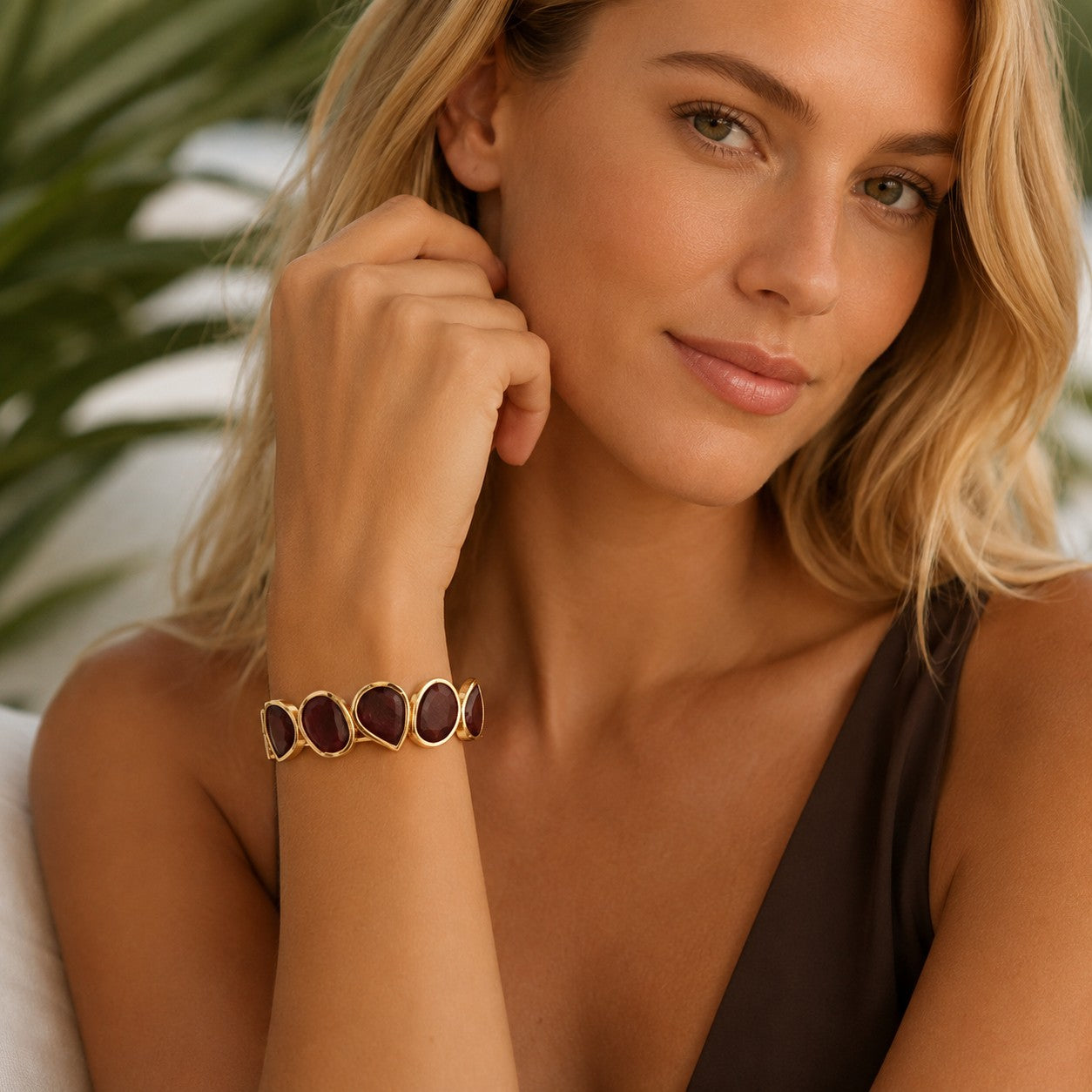
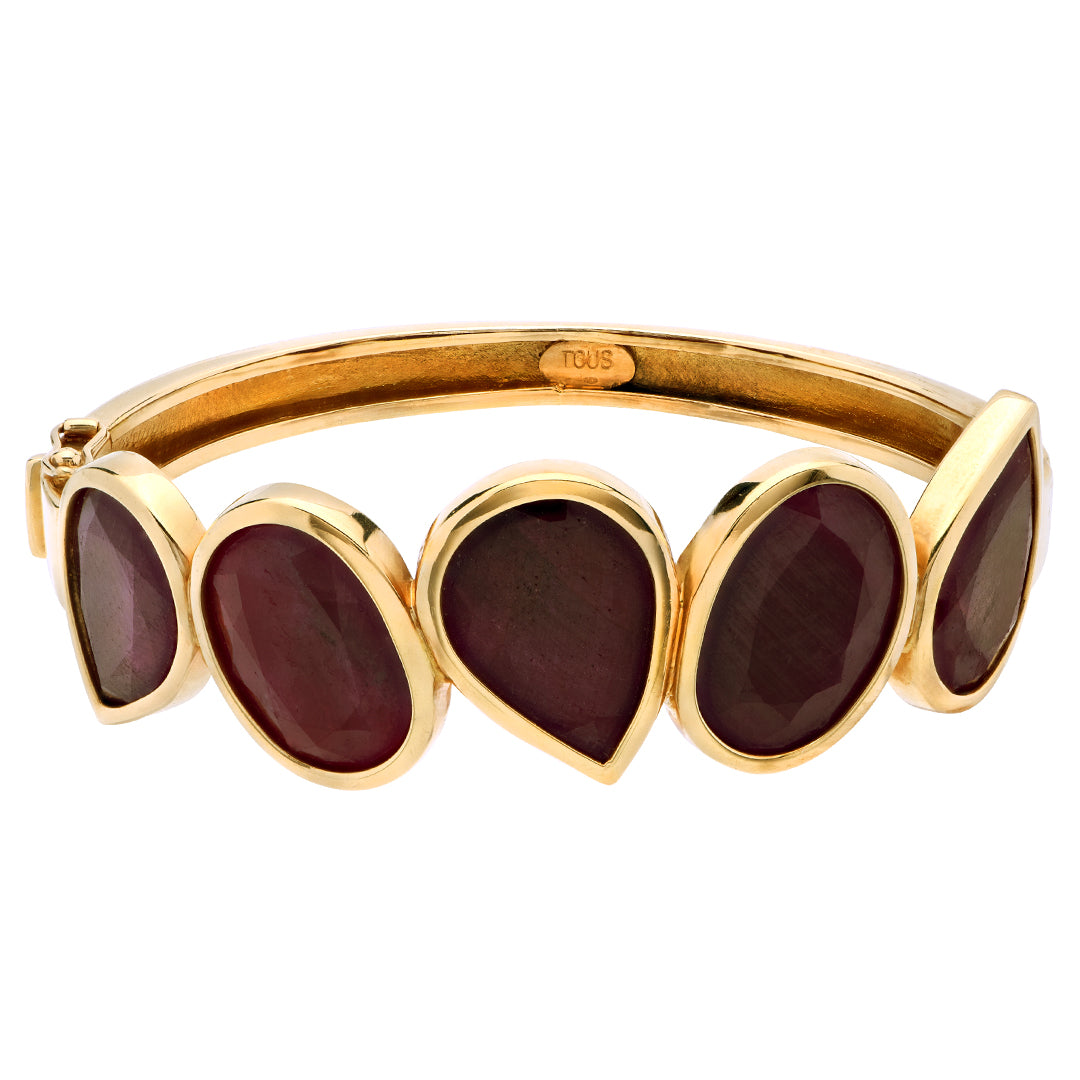
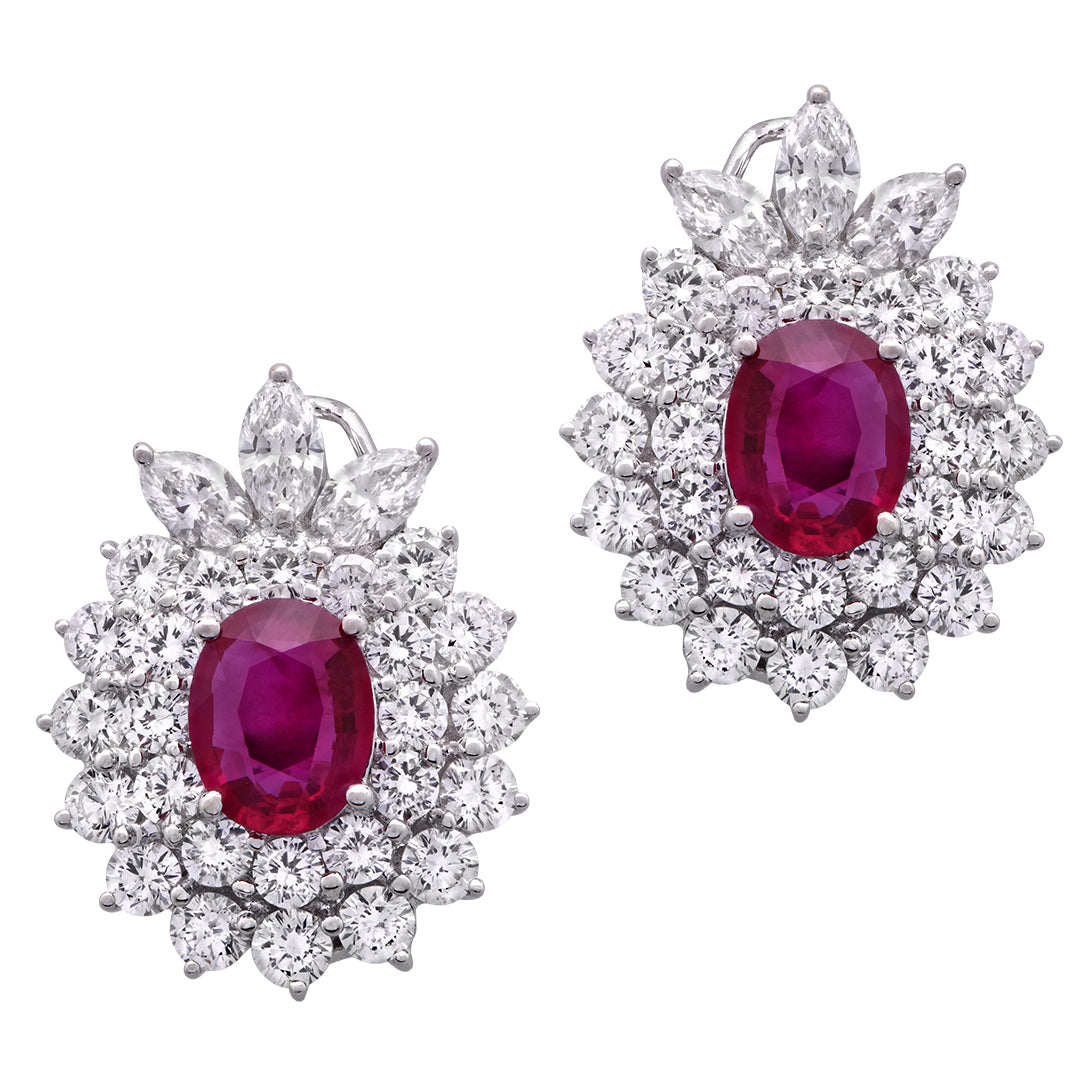
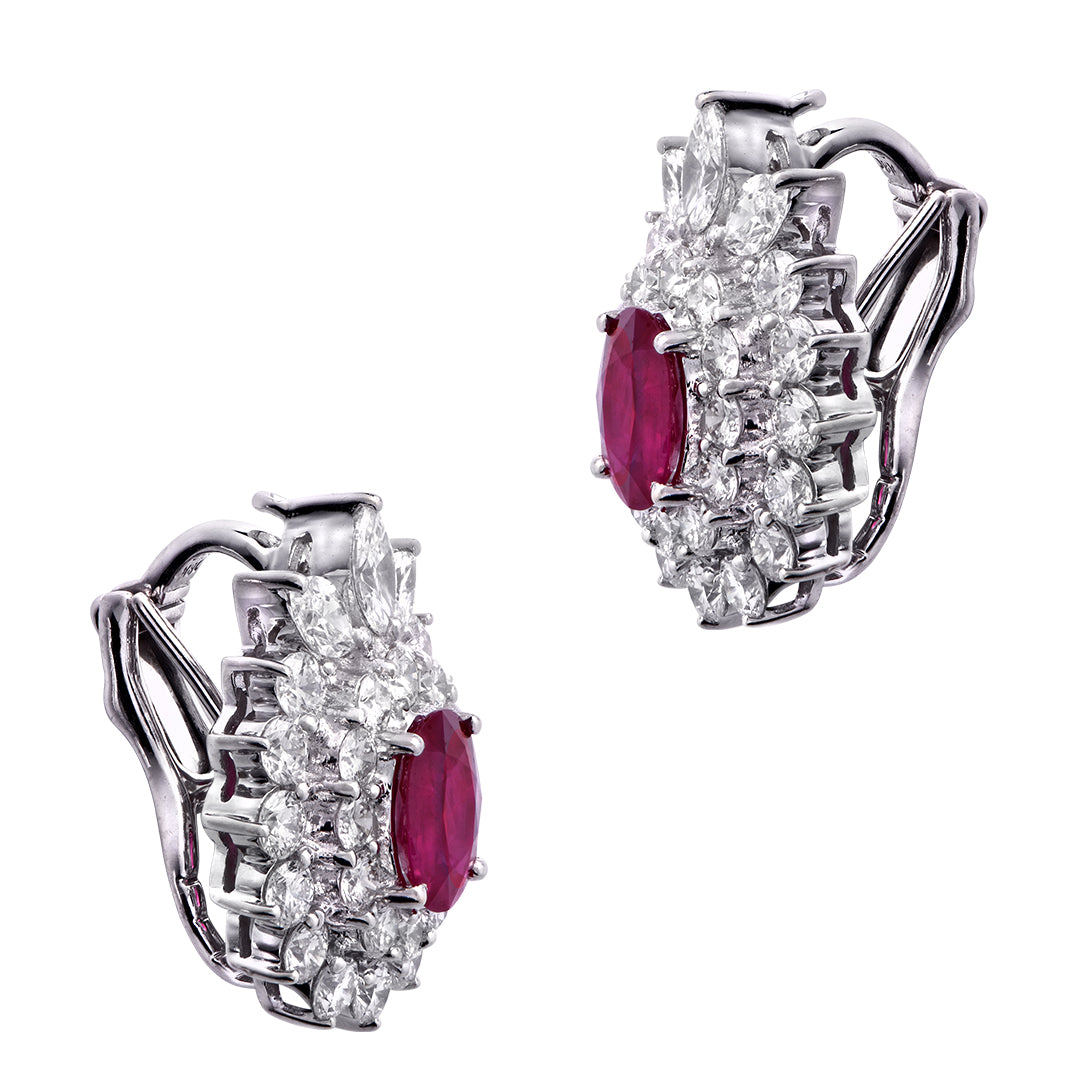
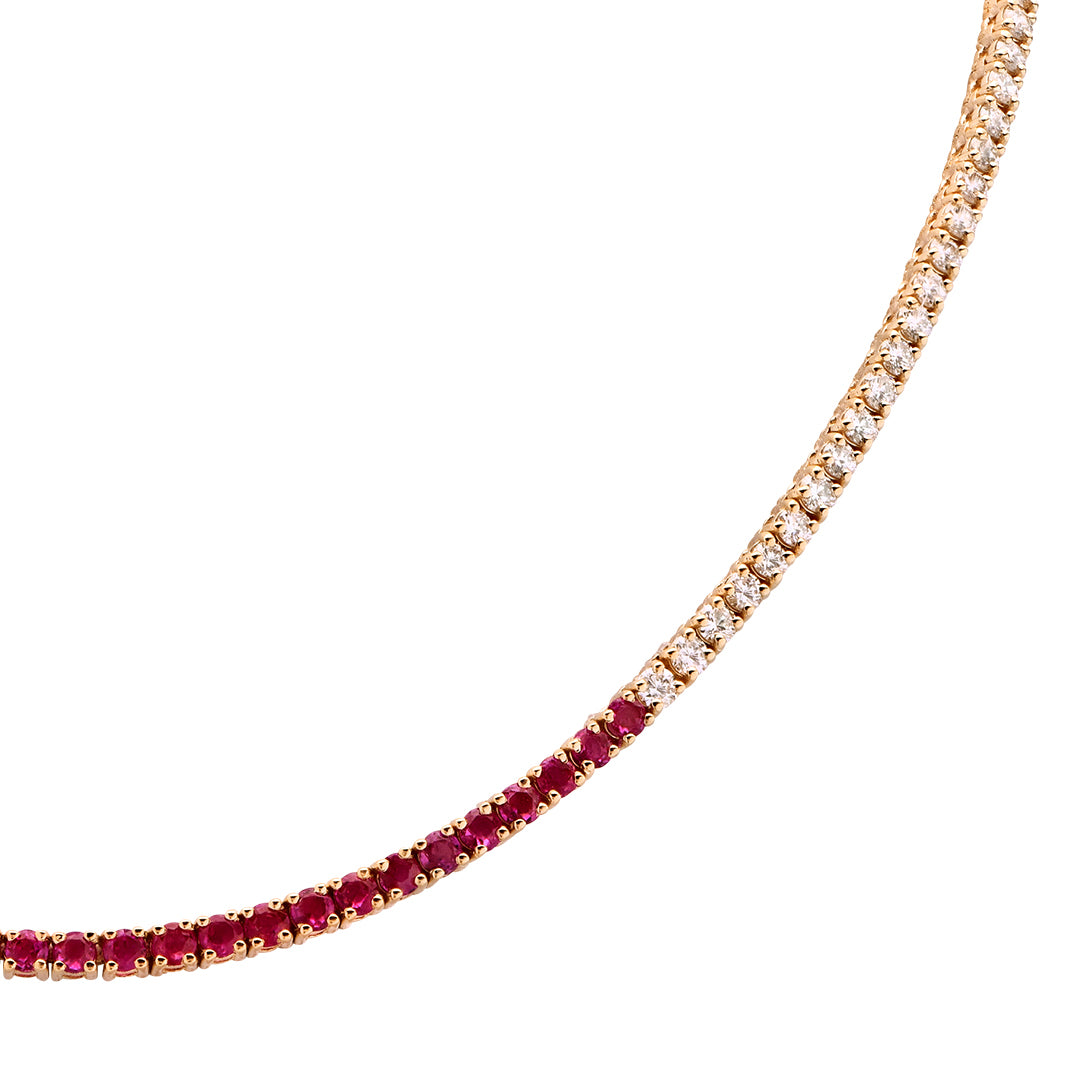
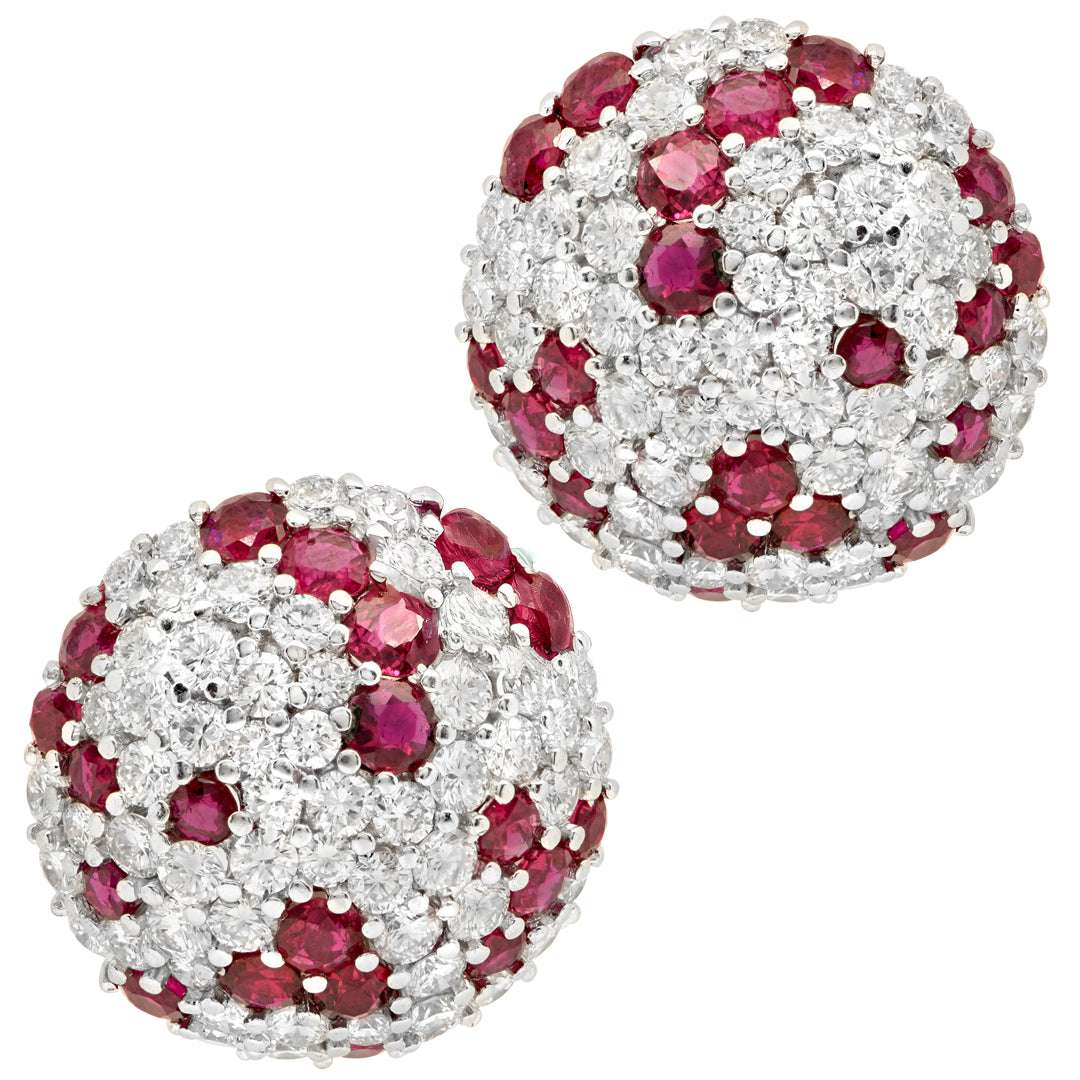
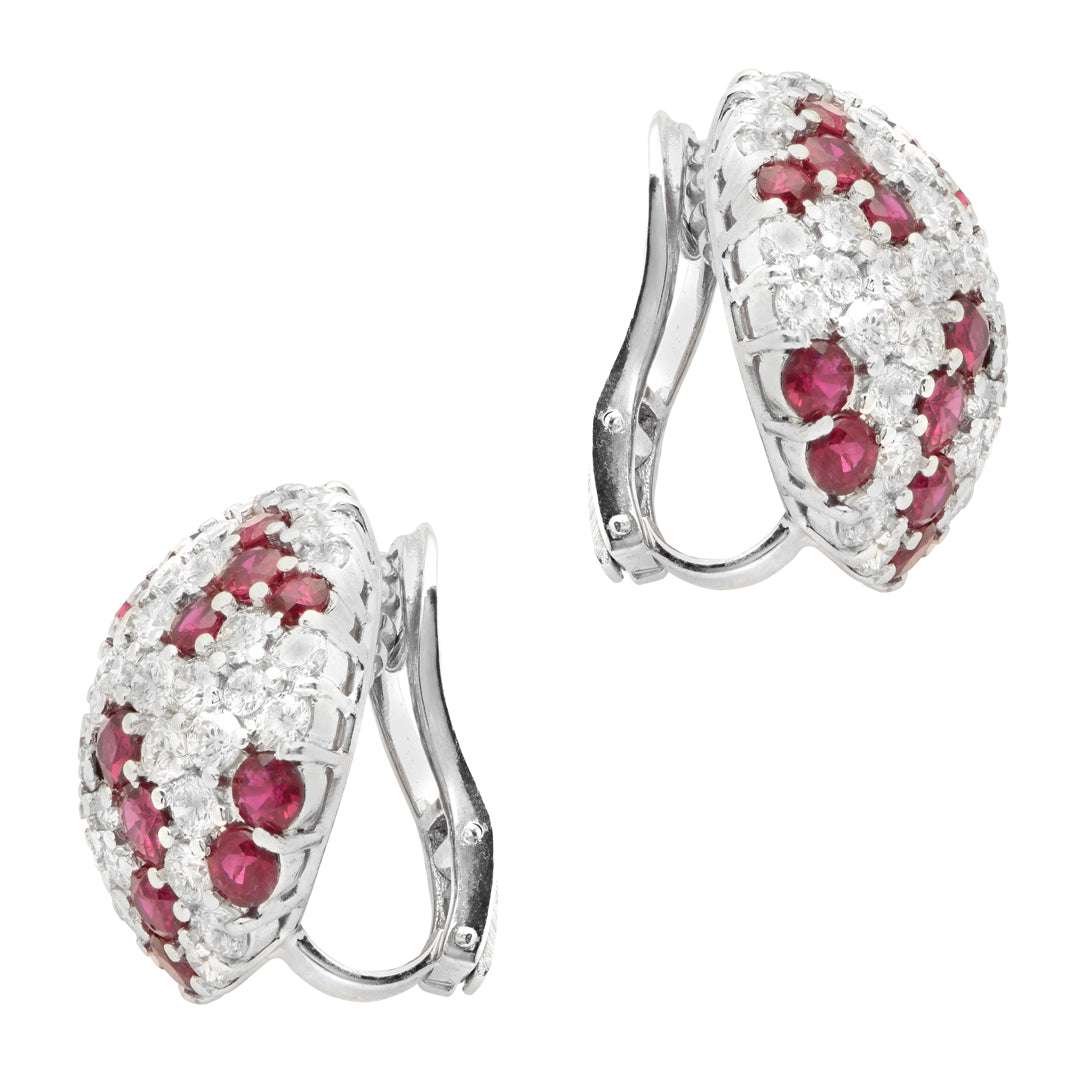
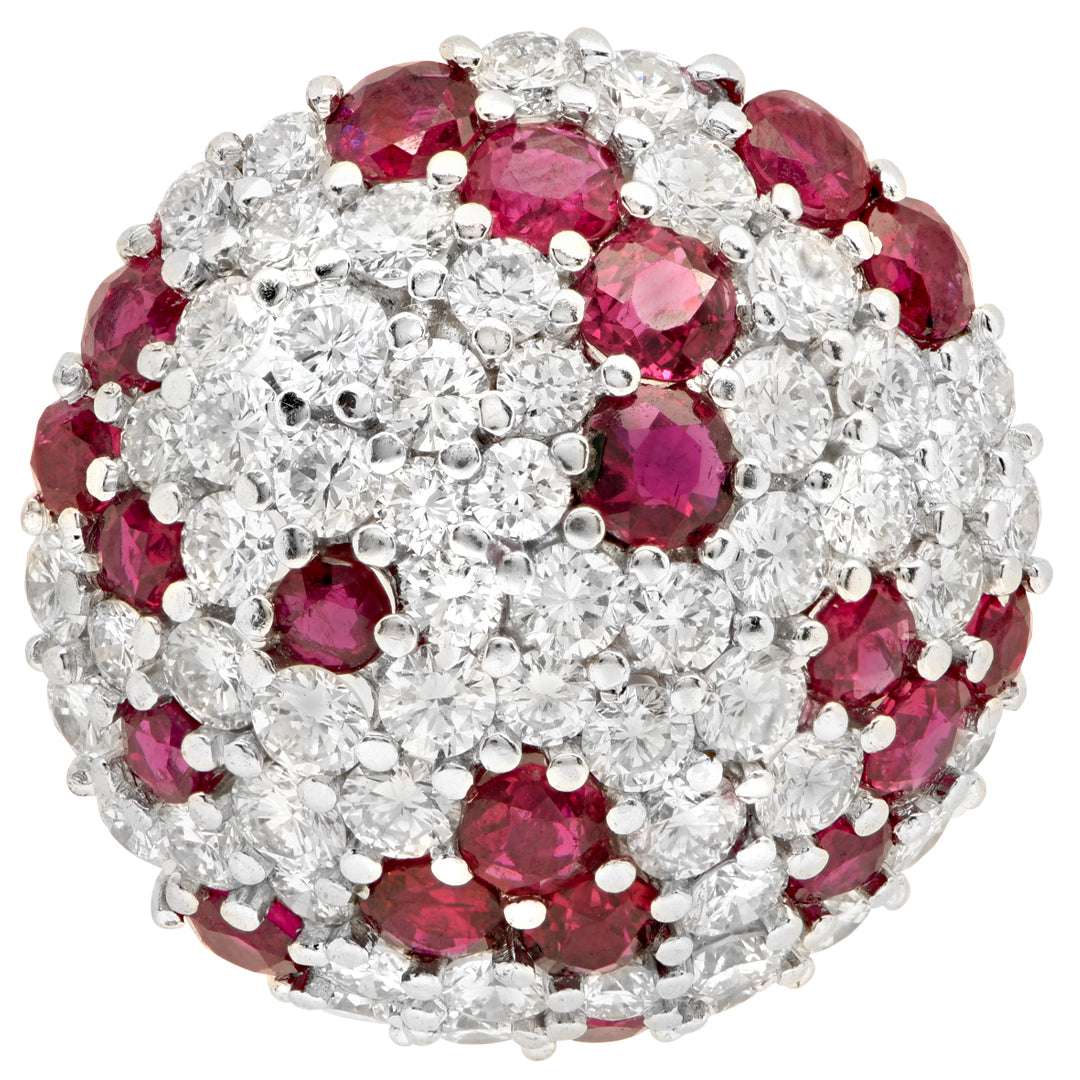
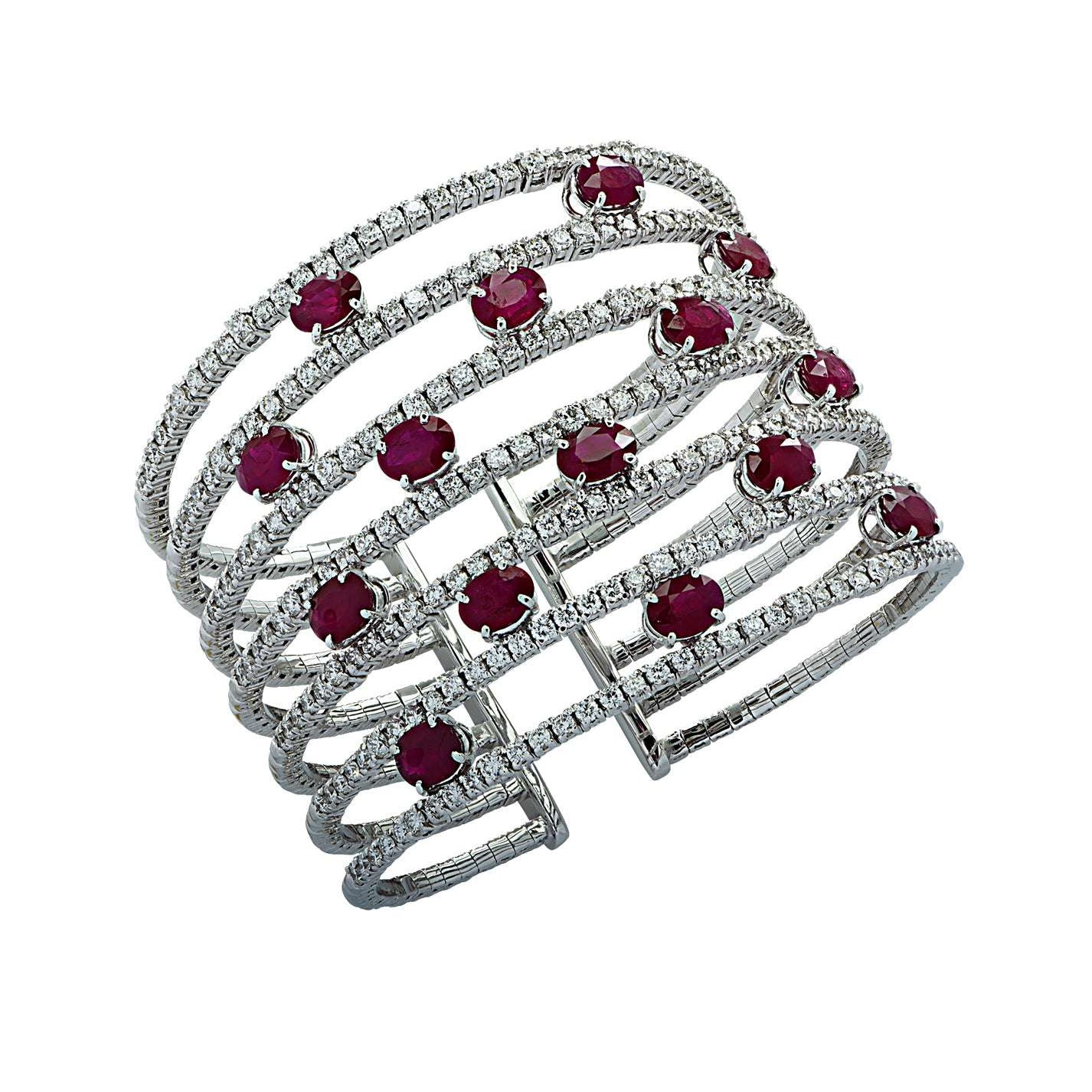
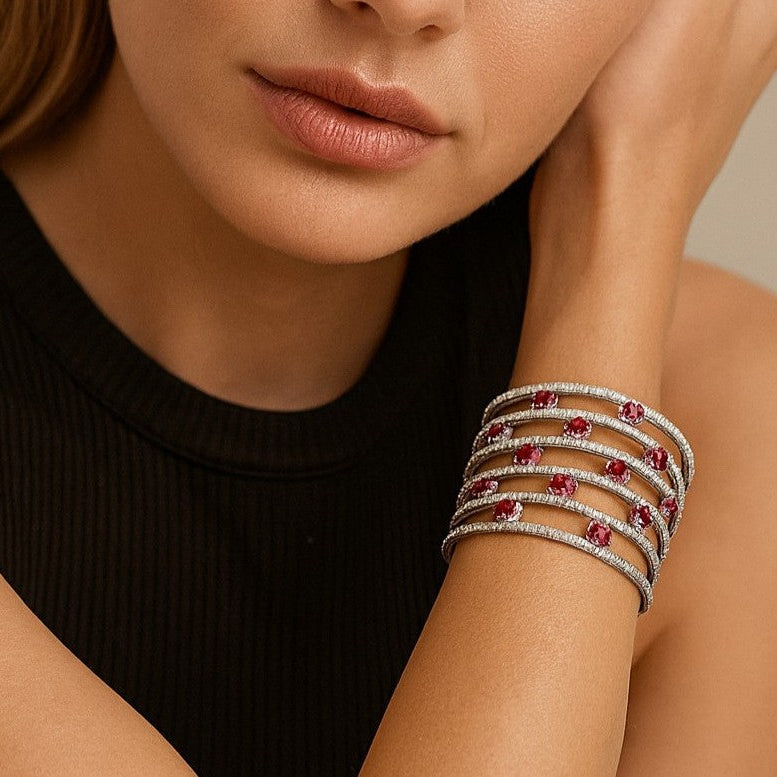
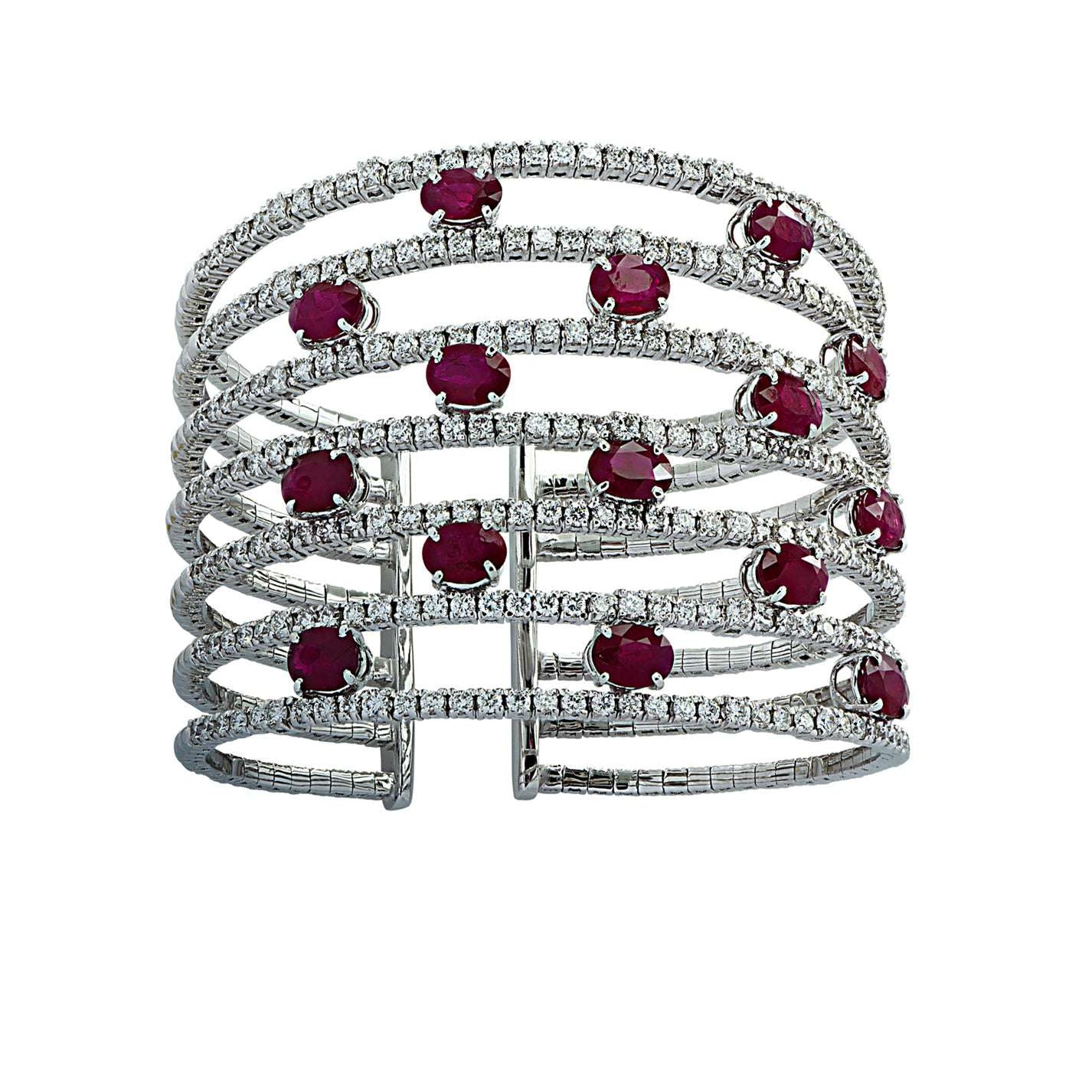
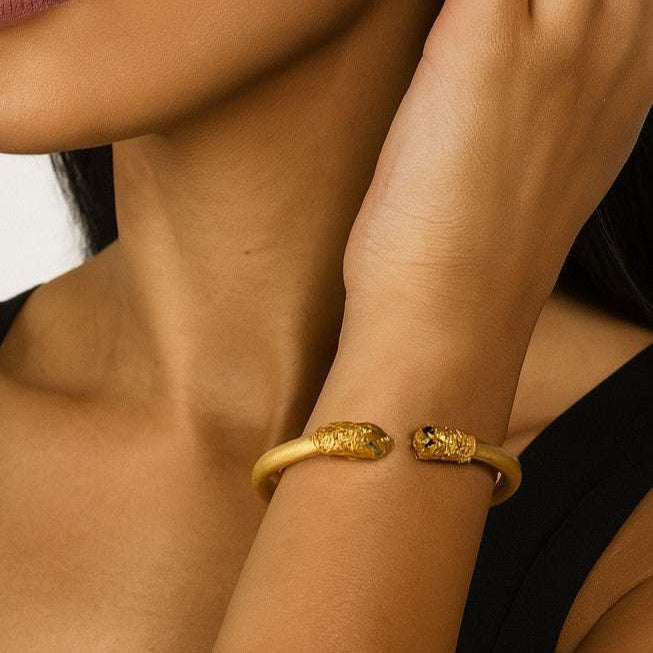
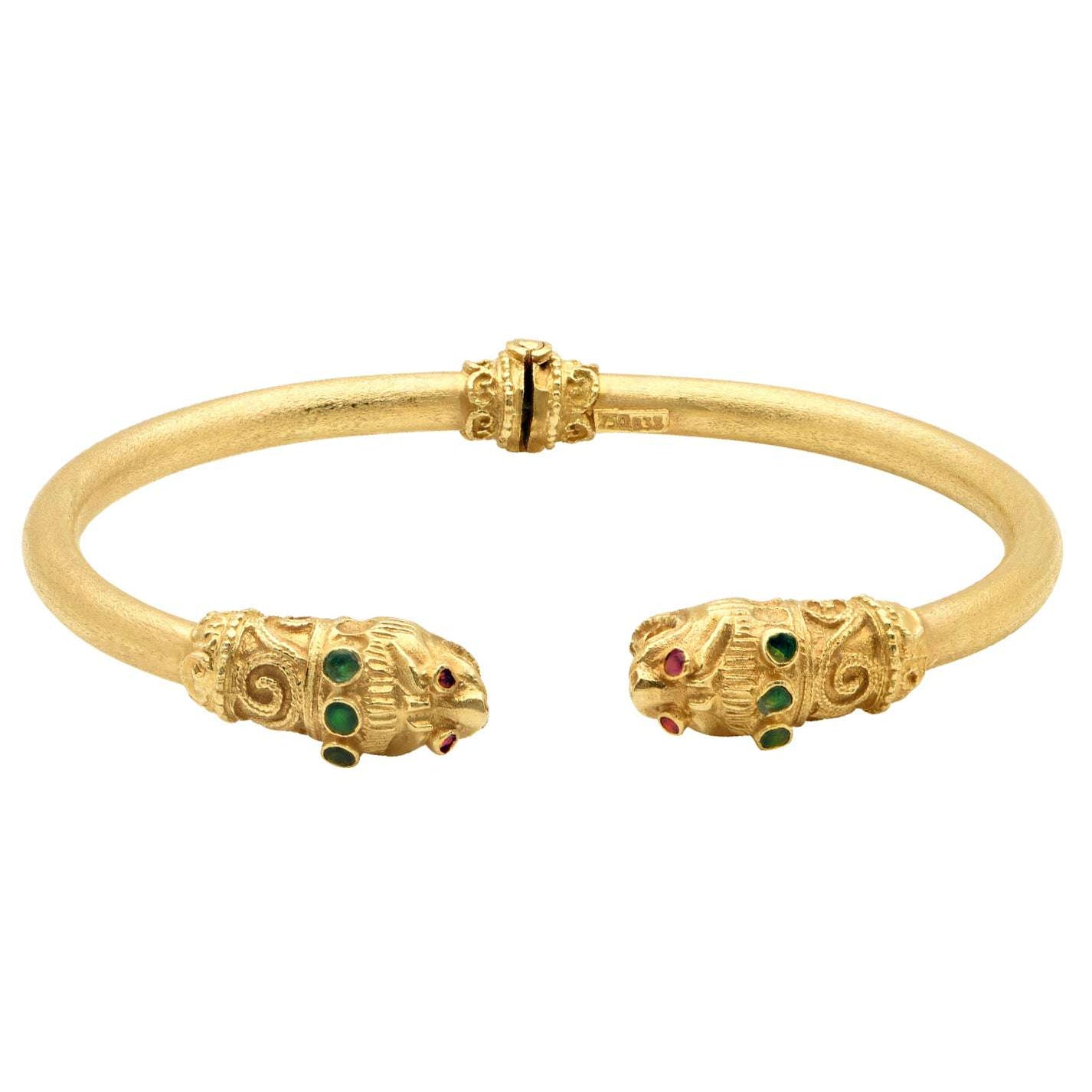
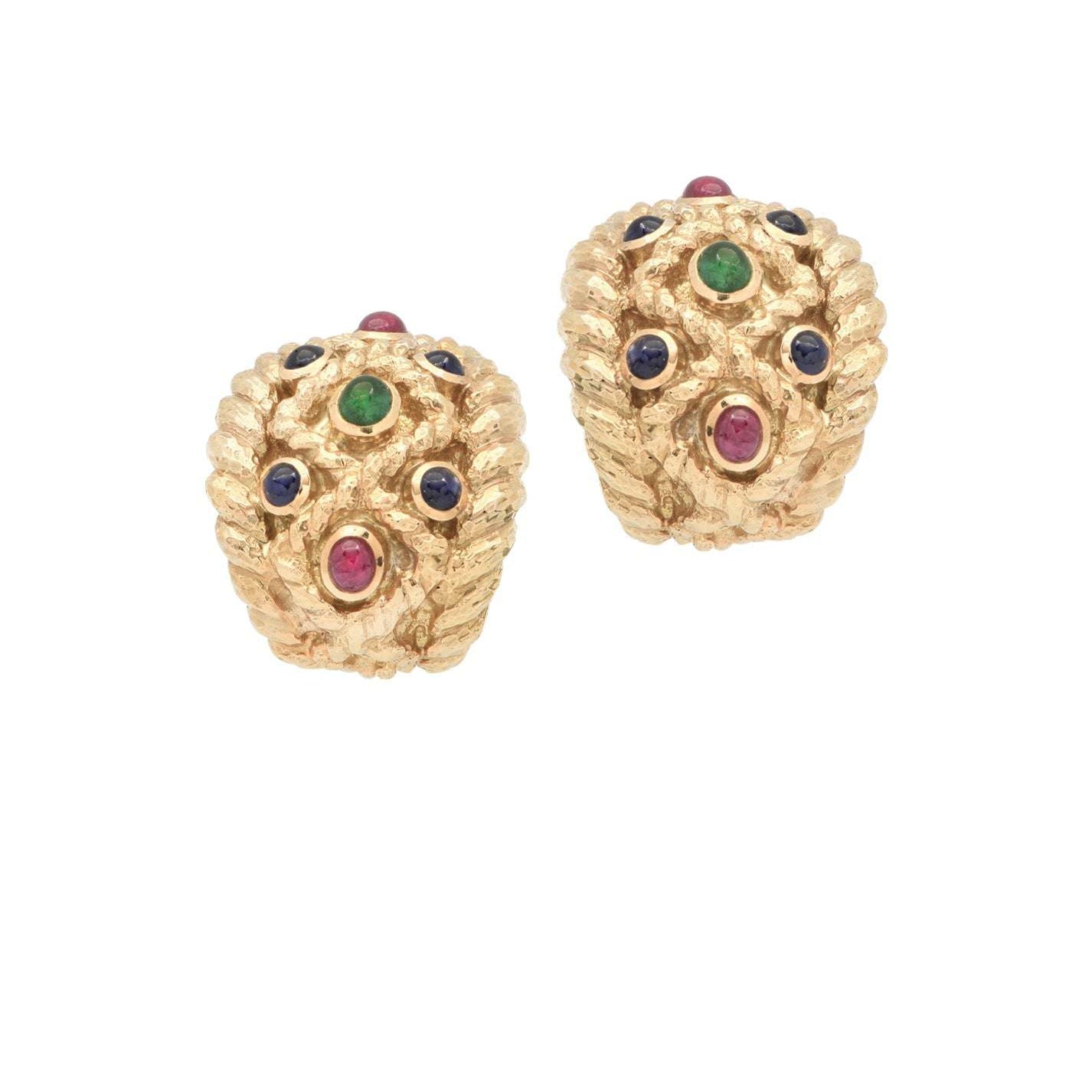
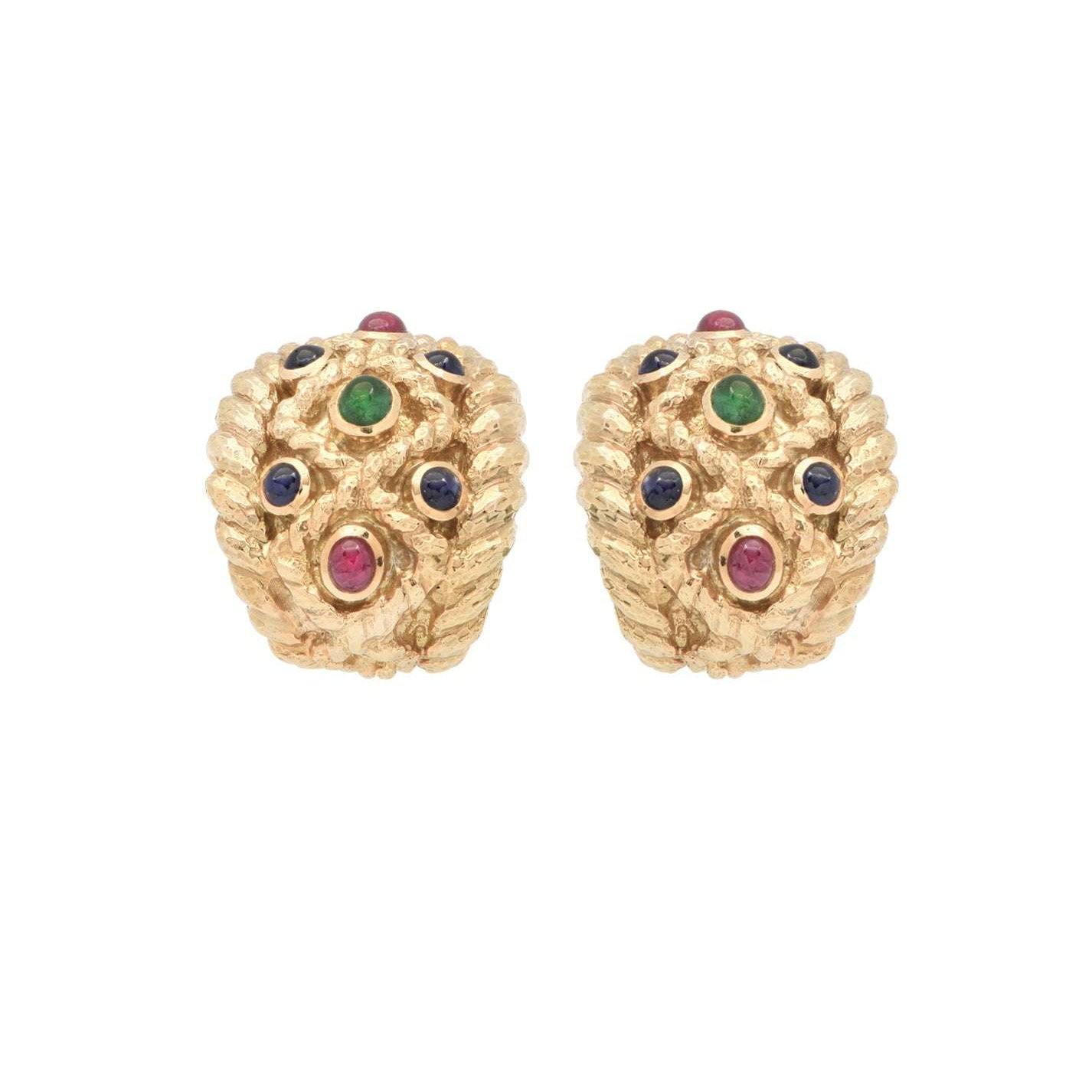
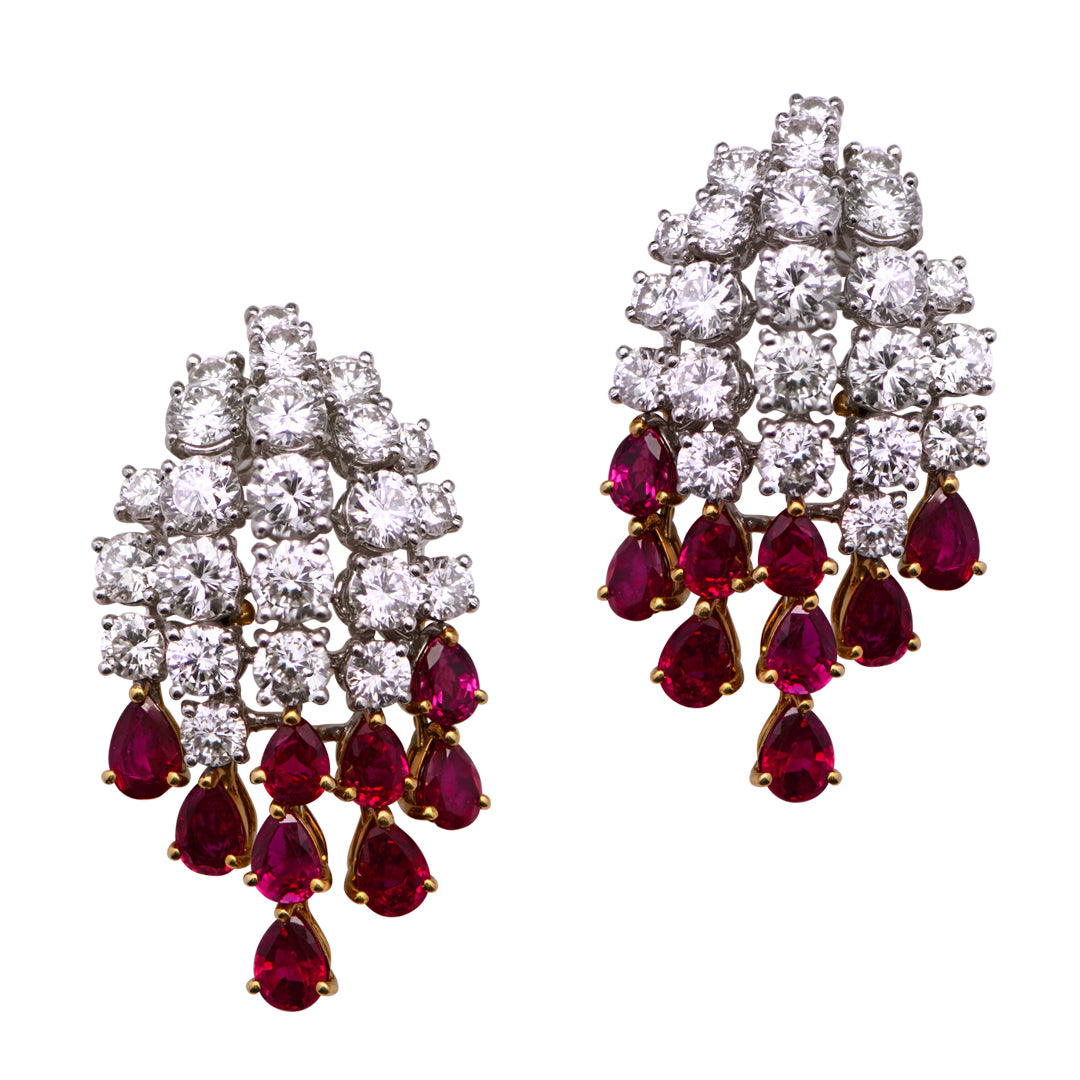
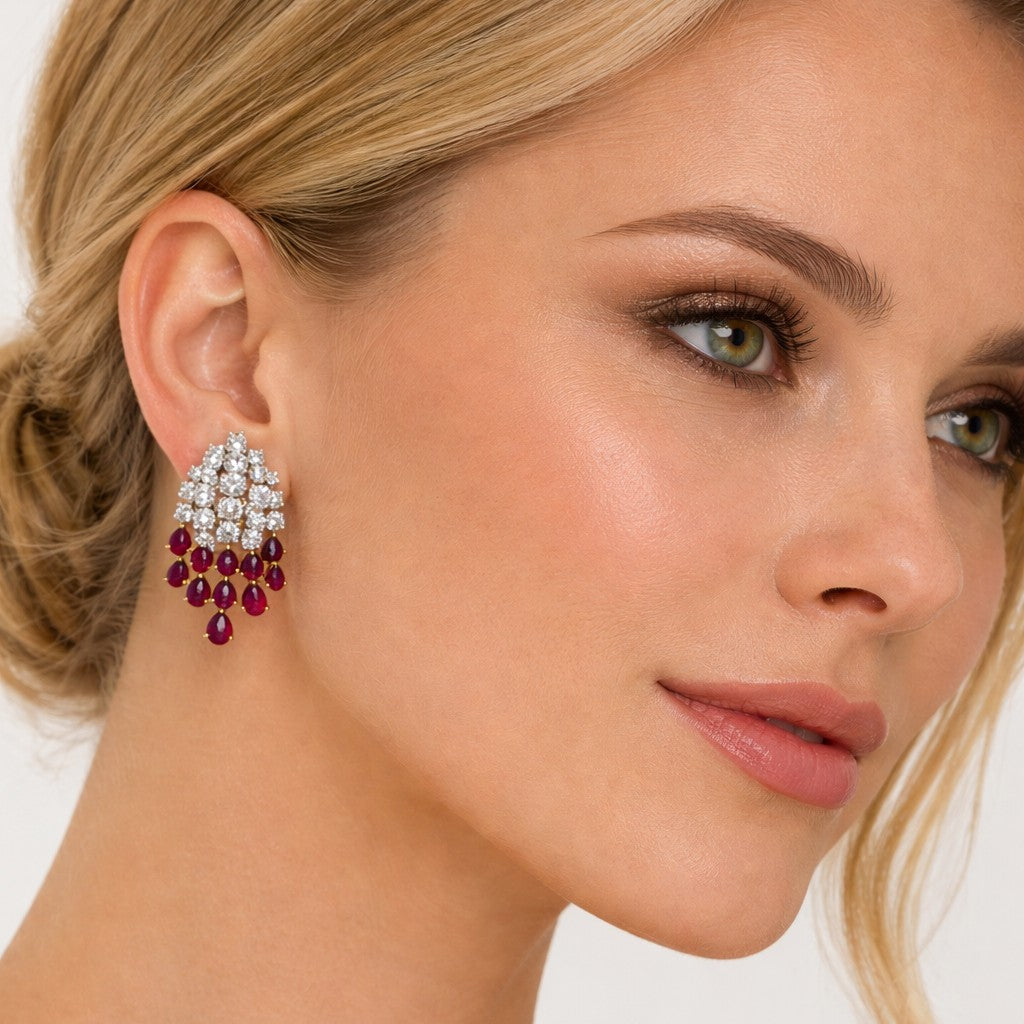
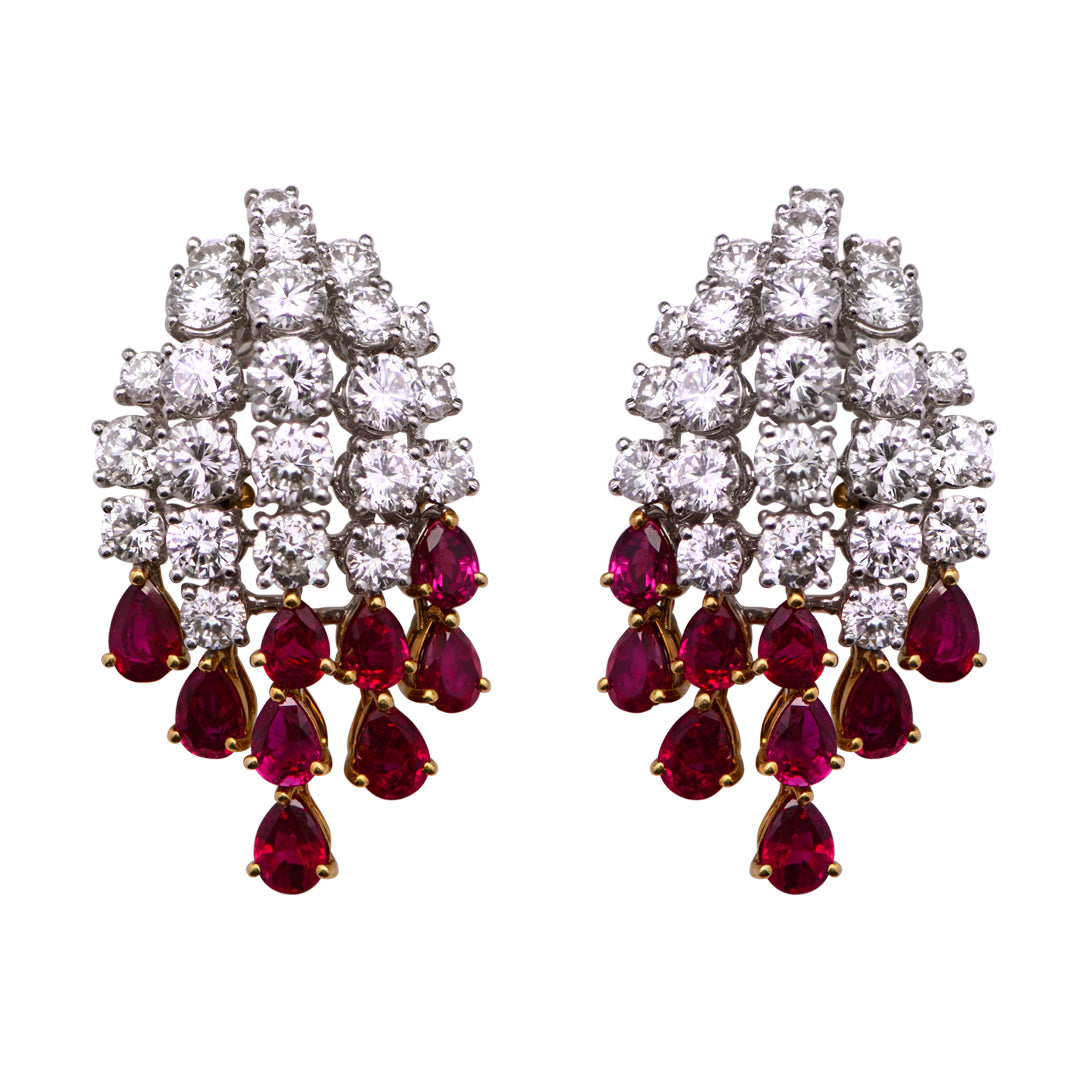
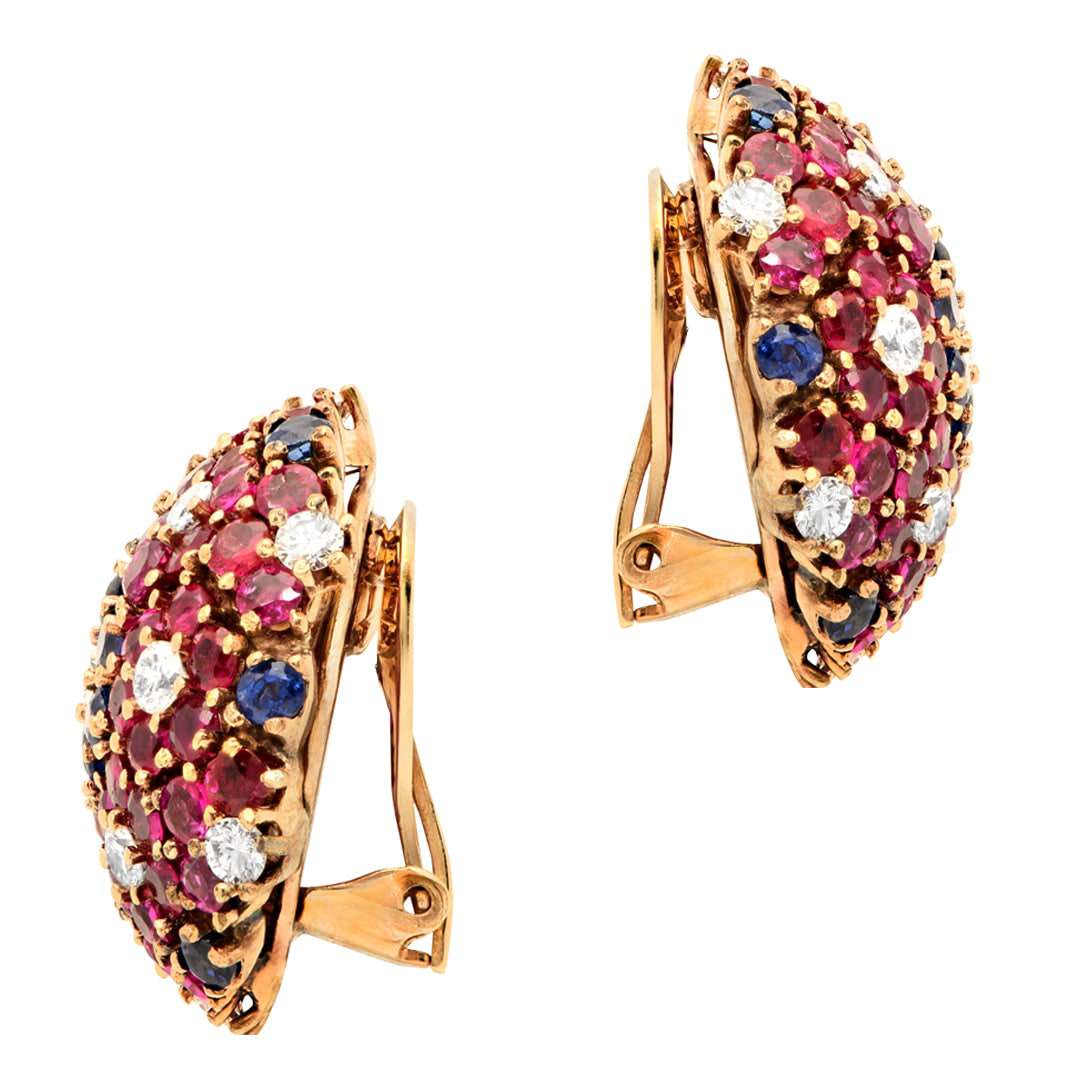
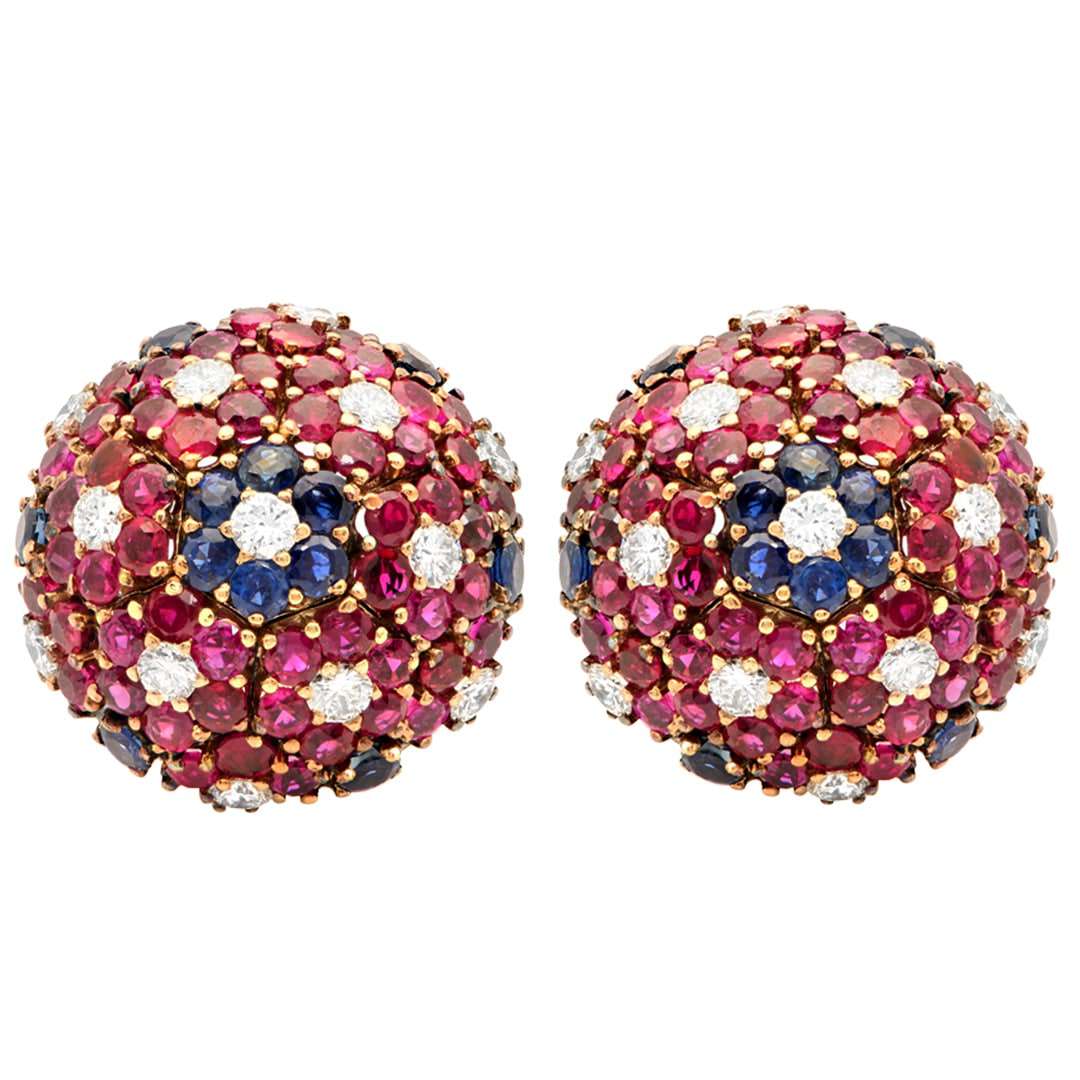
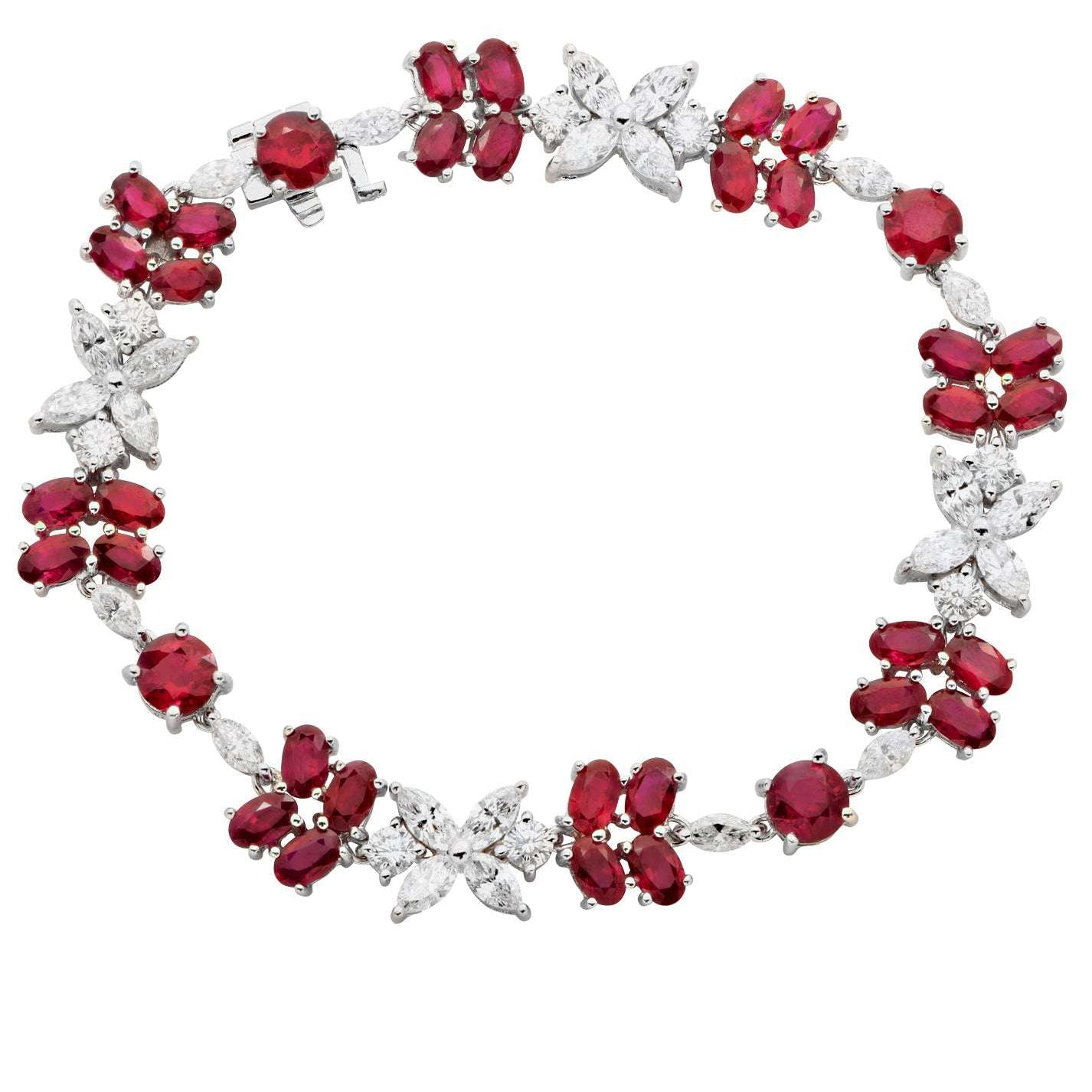
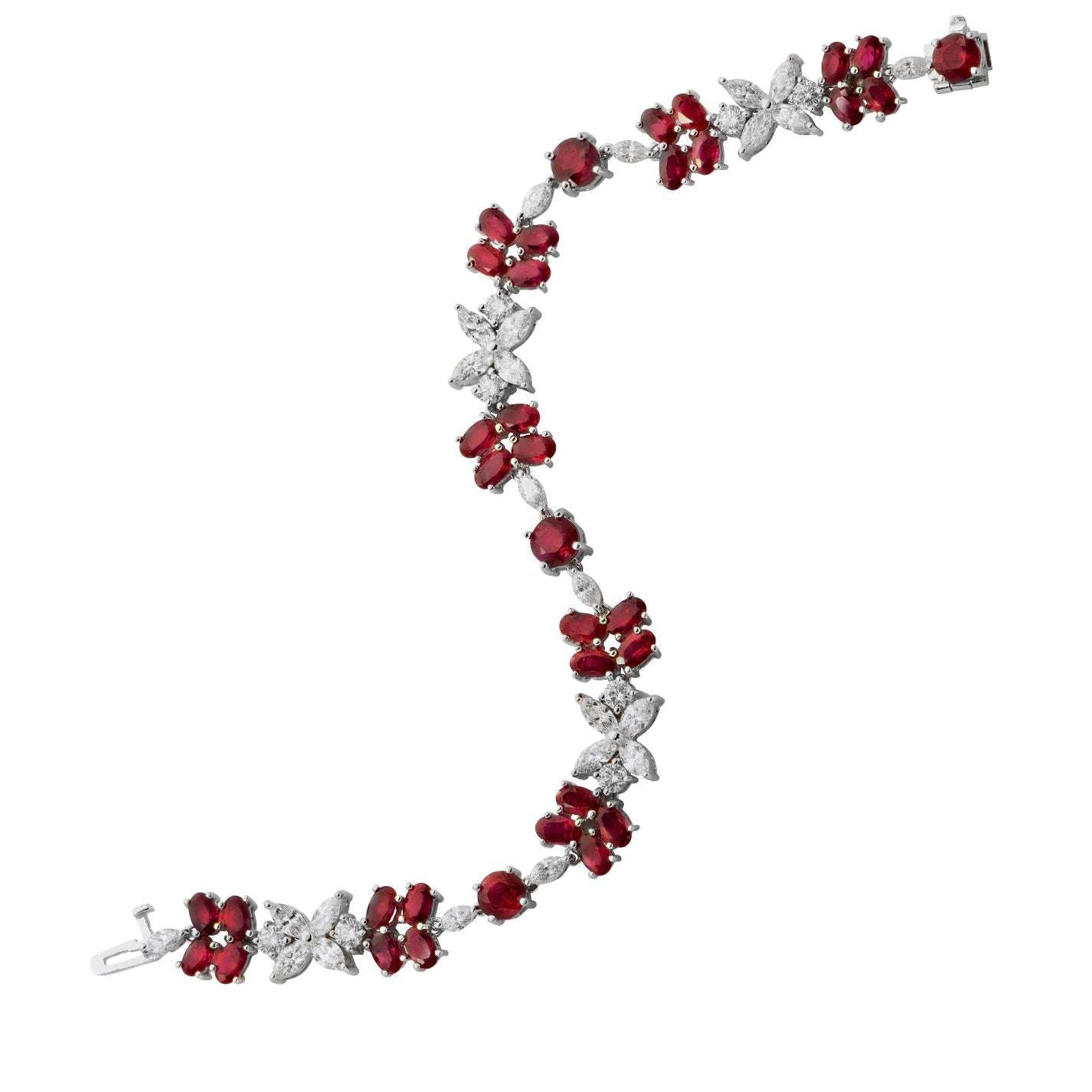
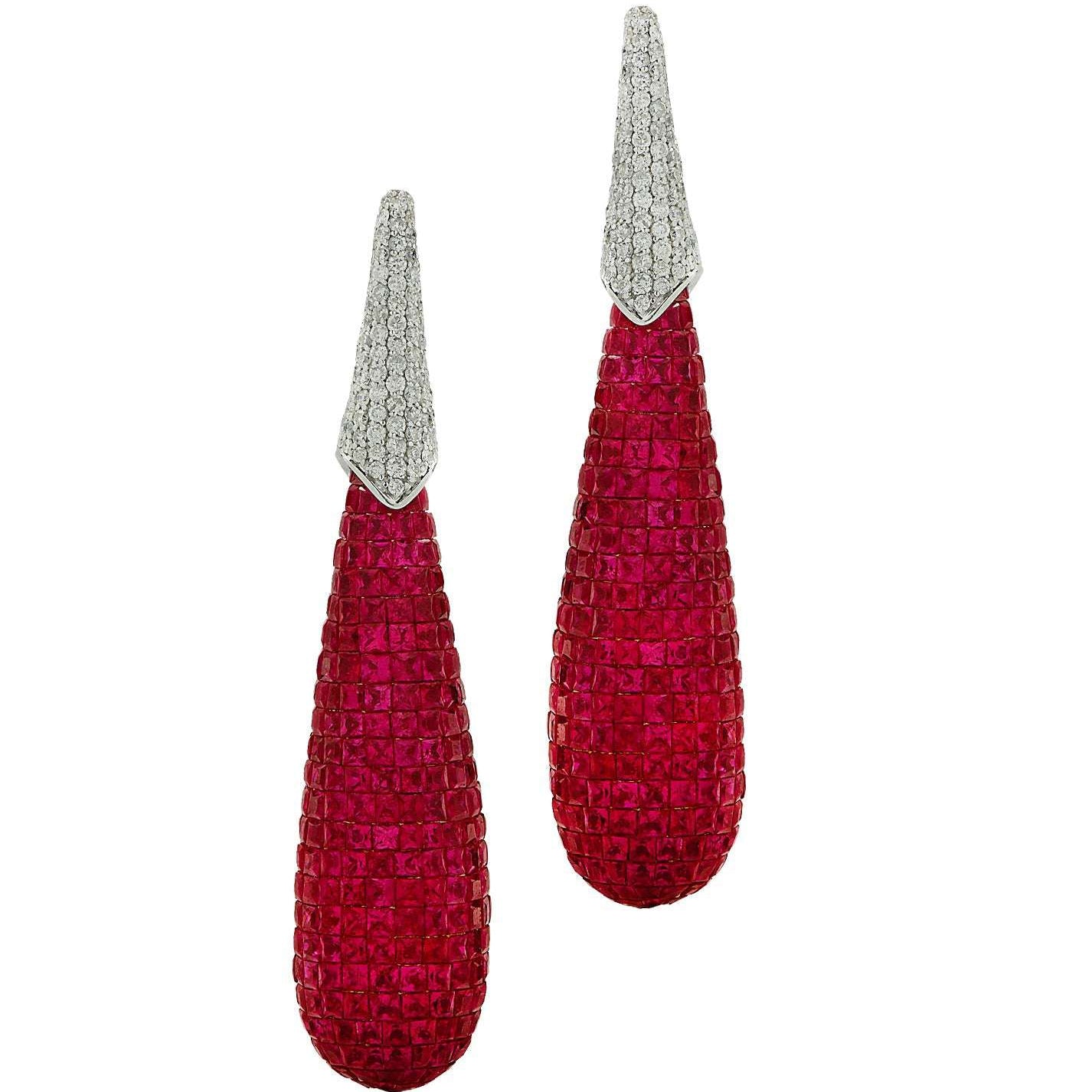
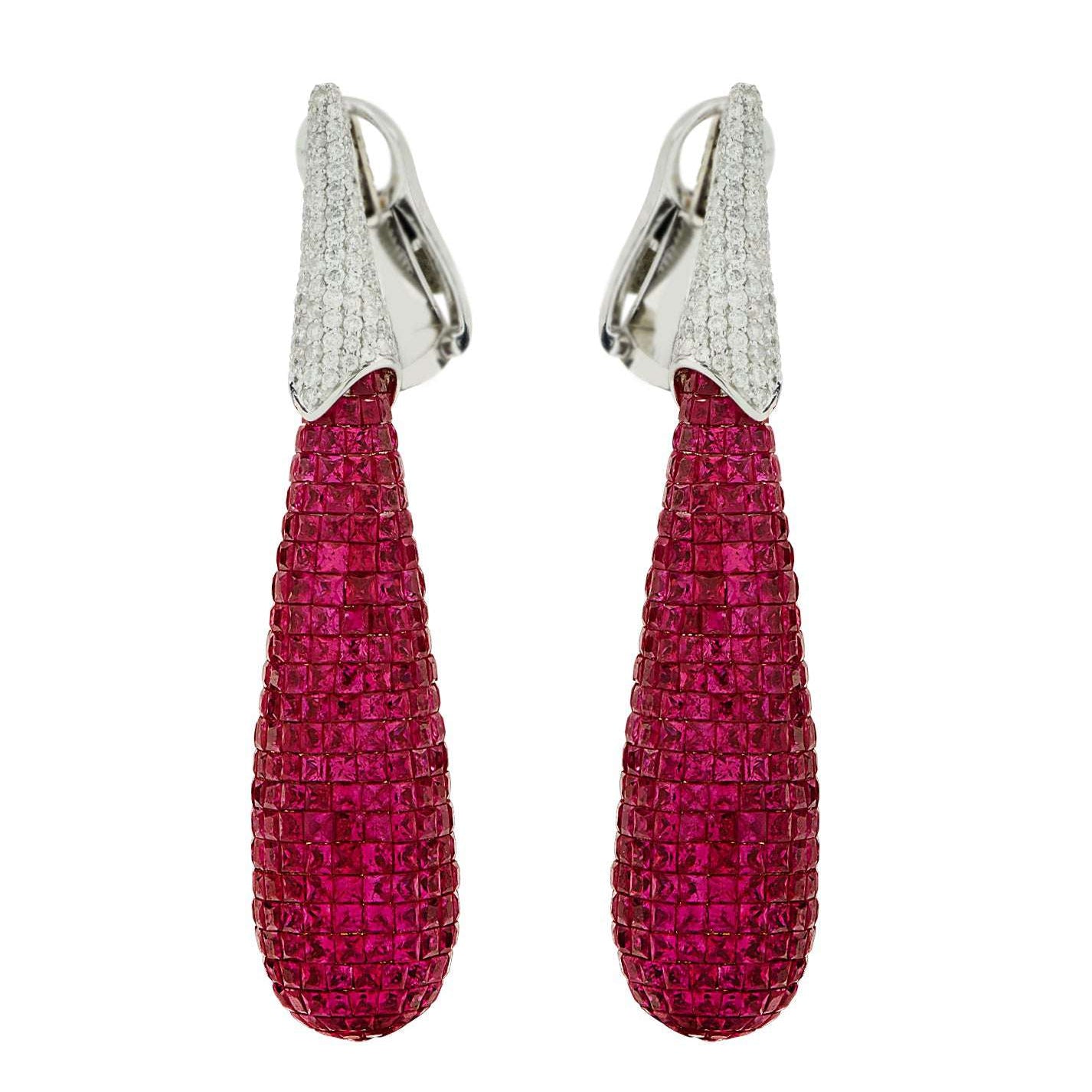
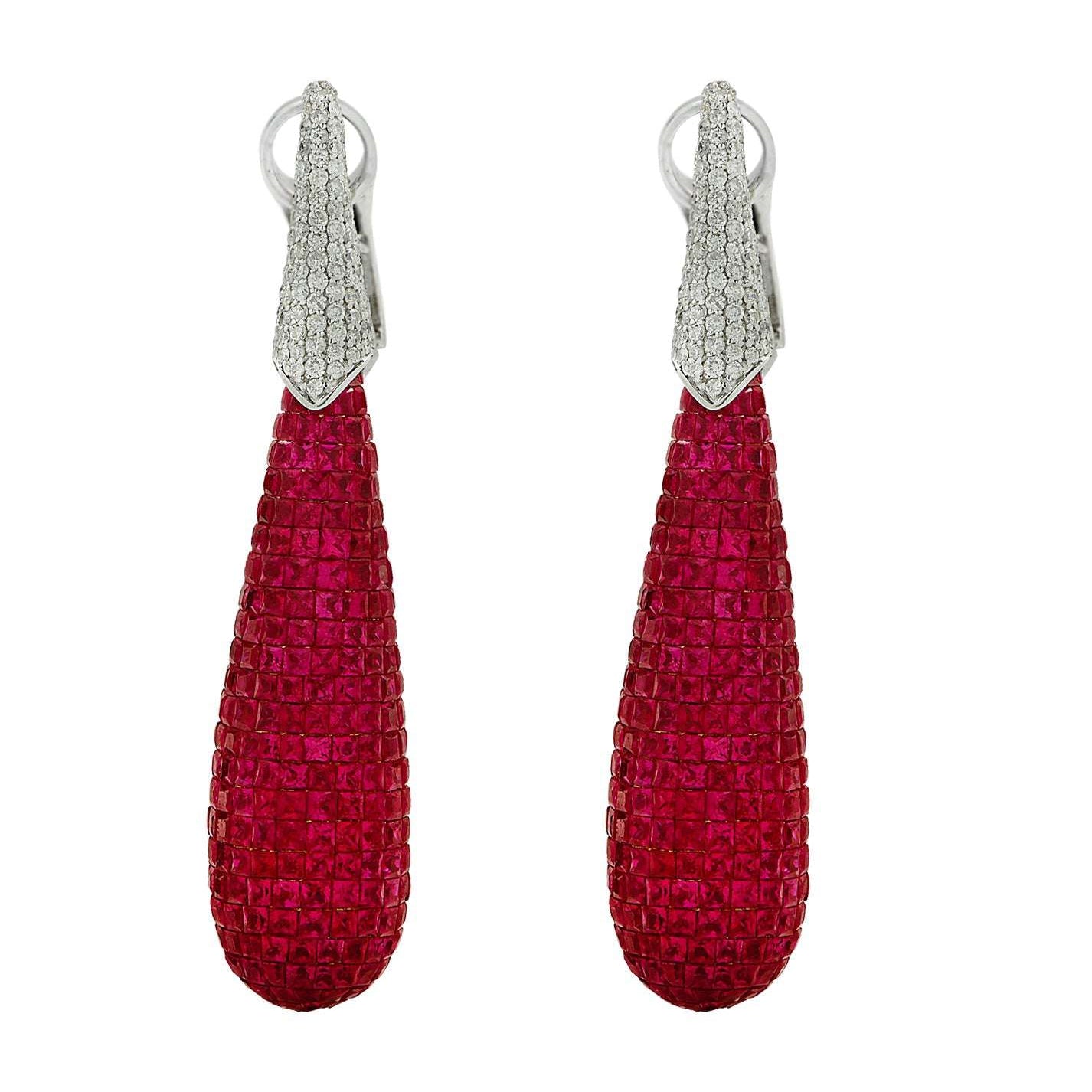
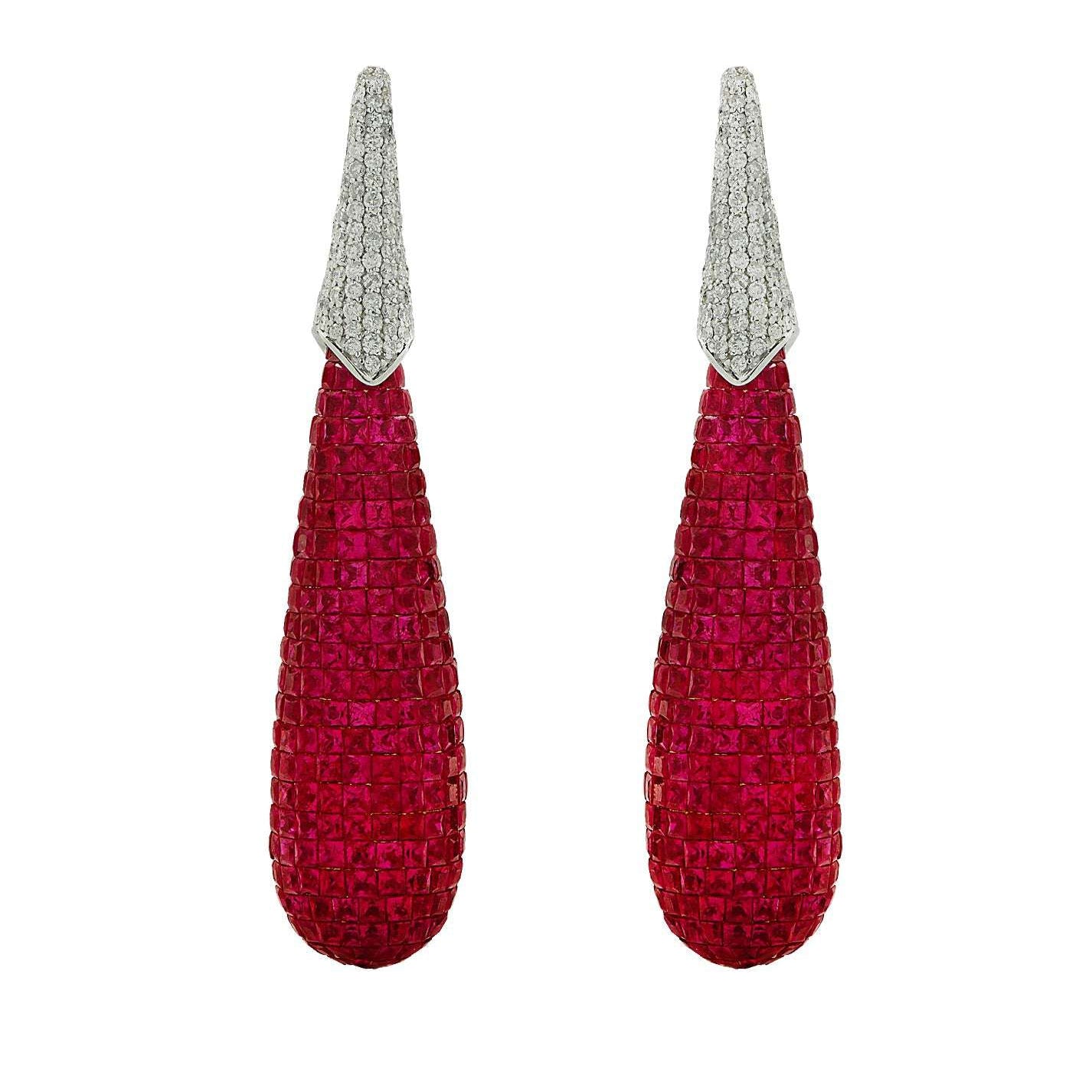
Ruby studs pop against the skin, rounds and ovals are timeless, but step cuts offer a sleek, modern vibe. Hoops with ruby pavé feel playful: drops bring movement and catch the light. For bracelets, tennis styles with alternating rubies and diamonds give rhythm, while a single ruby charm on a chain keeps it minimal. If you're active, choose low‑profile settings so your stones don't snag.
Metal Choices And Setting Security
- Metal color changes the mood. Yellow gold warms ruby's red: white metals (platinum, white gold) cool it down and add contrast: rose gold leans romantic.
- Prong count matters. Four prongs show more stone: six or a bezel boosts security. For softer corners on cushions or pears, consider V‑prongs.
- Daily‑wear rings benefit from platinum or 14k gold for strength. Platinum prongs resist thinning over time: 18k is richer in color but a bit softer.
How To Evaluate Quality And Price
The 4Cs For Rubies: Color, Clarity, Cut, And Carat
- Color: The biggest value driver. Aim for vivid saturation and a lively, medium to medium‑dark tone. Too dark looks inky: too light looks pinkish (which can shift a stone into sapphire territory). Evenness of color across the face matters.
- Clarity: Eye‑clean is wonderful but uncommon. A few inclusions are fine if the stone still looks bright. Surface‑reaching fractures can reduce durability and value.
- Cut: Unlike diamonds, rubies aren't graded on cut the same way, but cut still affects brilliance and how evenly color shows. Ovals and cushions often show ruby color beautifully: well‑proportioned stones avoid "windows" (pale, see‑through centers).
- Carat: Prices jump at milestones (1.0, 2.0, 3.0 ct). A well‑cut 1.2 ct with rich color can outshine a larger but dull 2 ct. Trust your eyes.
Certification And Grading Reports
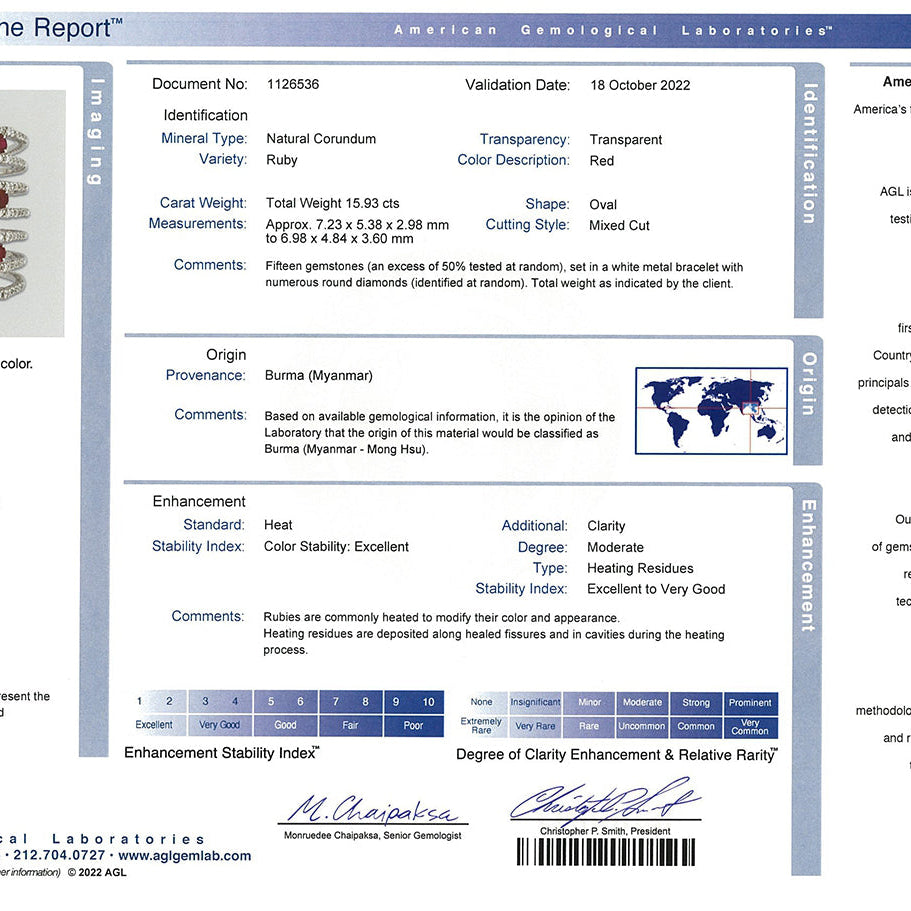
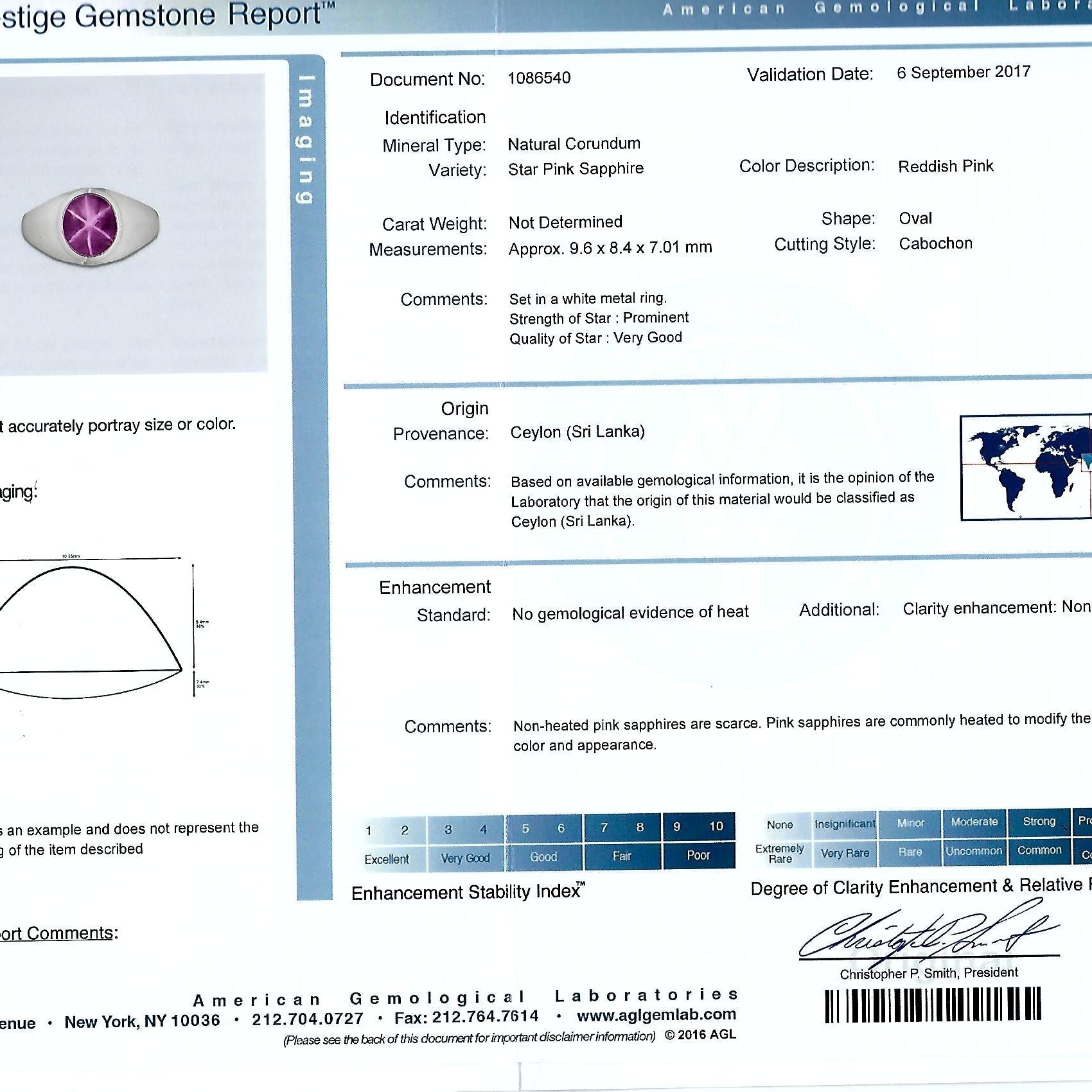
For important purchases, ask for a report from a respected lab. The Gemological Institute of America (GIA), American Gemological Laboratories (AGL), Gübelin, SSEF, and GRS are widely recognized. Reports can address:
- Identity (ruby/corundum)
- Treatments (heated, unheated, lead‑glass filled)
- Origin opinion (when determinable)
You can learn more about ruby properties and treatments at the GIA ruby resource and, for nuanced color/treatment notes, AGL's reports are considered highly informative.
Price Ranges And What To Expect
- Natural, heated rubies: Expect to pay a premium for vivid color and good clarity. Commercial‑quality small stones might start in the low hundreds per carat: fine, larger gems can reach thousands to tens of thousands per carat.
- Natural, unheated rubies: Significant premium for top stones, prices can multiply several times over heated equivalents if color is exceptional.
- Lab‑grown rubies: Typically a fraction of natural prices, great for larger looks without the steep jump.
- Lead‑glass–filled/composites: Very low cost, but durability is limited: treat them as fashion jewelry, not heirlooms.
When two rubies look similar, small differences, tone, fluorescence, inclusions under the table, often explain big price gaps. Compare side by side whenever possible.
Care, Maintenance, And Everyday Wear
Cleaning And Safe Methods
- Best for most rubies: warm water, a drop of mild dish soap, and a soft brush. Rinse well and pat dry.
- Ultrasonic/steam: Usually fine for untreated and heat‑treated rubies in good condition. Avoid for lead‑glass–filled, fracture‑filled, or heavily included stones.
- Keep harsh chemicals away. Acids, bleach, and even some household cleaners can attack filled stones and degrade settings.
Storage And Protection
- Store ruby gemstone jewelry separately from softer gems to prevent scratches. Individual pouches or compartments are ideal.
- Remove rings for weight training, gardening, or gritty chores. A bezel or low profile helps, but metal still scuffs.
- Last on, first off. Apply lotions, perfume, and hairspray before you put jewelry on: take jewelry off before you cleanse.
Resizing, Resetting, And Inspection
See a jeweler every 6–12 months for a checkup. They'll tighten prongs, check the integrity of bezels, and make sure stones aren't shifting. If you plan a resize or a new setting, disclose any treatments, especially glass‑fill, so your jeweler uses safe techniques. It's worth photographing your piece before service for peace of mind.
Ethical Sourcing And Buying Tips
Origin Transparency And Responsible Mining
Colored‑gem supply chains are complex, often involving small‑scale miners and multiple middlemen. Look for sellers who share what they know about origin and who support responsible practices, traceable supply, safe working conditions, and fair pay. Memberships in groups like the Responsible Jewellery Council (RJC) and partnerships with reputable cutters can be good signs. When in doubt, ask questions and expect clear answers.
Lab-Grown As A Sustainable Option
If minimizing environmental impact or avoiding mining risks is a priority, lab‑grown ruby is compelling. Lower price, consistent quality, and no traditional mining footprint. You can still choose recycled or certified‑responsible metal for the setting to round out a lower‑impact piece.
Smart Shopping Checklist
- Compare in daylight. Ruby looks different under warm indoor light vs. daylight: evaluate in both.
- Prioritize color. Start with hue, tone, and saturation you love: then weigh clarity and size.
- Get disclosures in writing. Treatment type, return policy, and any guarantees.
- Ask for a trusted lab report for significant purchases.
- Check craftsmanship: secure prongs/bezels, smooth settings, sturdy shank, and well‑finished gallery.
- Align with your lifestyle. If you're active, choose protective settings and durable metals.
- Budget with intention. Decide where to allocate, color first, then size. Lab‑grown stretches dollars: unheated natural commands premiums.
- Buy from people you like. Service, honesty, and a good bench jeweler matter long after the sale.
Conclusion
Your perfect piece of ruby gemstone jewelry should feel like it already belongs to you, the color that makes your heart jump, a setting that fits your life, and the confidence that it's well made and well cared for. Focus on color you love, ask about treatments, choose secure craftsmanship, and commit to simple care. Do that, and your ruby won't just turn heads today, it'll tell your story for decades.
Frequently Asked Questions About Ruby Gemstone Jewelry
What makes ruby gemstone jewelry unique compared to other red stones?
Ruby is the red variety of corundum colored by chromium, creating vivid red hues and a soft fluorescence that looks “lit from within.” Unlike diamonds, some inclusions are normal; what matters is lively transparency and even color. Top rubies show strong saturation with medium to medium‑dark tone.
How do I choose between natural and lab-grown rubies?
Natural rubies offer geological rarity and potential origin premiums. Lab‑grown rubies share the same chemistry and structure but cost far less, often with higher clarity and consistent color. If you want maximum size and sparkle per dollar, go lab‑grown; if rarity and history matter, choose natural.
Are heated rubies durable, and how can I spot common treatments?
Heat treatment is widely accepted and durable for everyday wear. Be cautious with lead‑glass–filled rubies—they can be damaged by chemicals, ultrasonic cleaners, or heat. Ask for written disclosure and a reputable lab report. Visual red flags for glass‑fill include rainbow flashes at fractures and bubble‑like inclusions.
What settings and metals are best for an everyday ruby ring?
Protective settings like bezels, semi‑bezels, or six‑prong designs add security. V‑prongs help cushion or pear corners. For durability, choose platinum or 14k gold; platinum prongs resist thinning over time. Metal color changes the mood: yellow gold warms ruby’s red, white metals add crisp contrast, rose gold feels romantic.
Is ruby gemstone jewelry a good choice for engagement rings?
Yes. Ruby rates 9 on the Mohs scale, offering excellent scratch resistance and suitability for daily wear when well‑set. Opt for sturdy settings (bezels or secure prongs) and routine jeweler checkups. Confirm treatments in writing—unheated rubies command premiums, while heat‑treated stones provide beauty and value.
Can I wear ruby gemstone jewelry in the shower or pool?
Skip pools and hot tubs—chlorine and chemicals can harm filled stones and degrade settings. Plain shower water is usually safe, but soaps and lotions leave residue that dulls sparkle. Remove jewelry for workouts, gardening, and gritty chores. Clean with warm water, mild dish soap, and a soft brush.